
Article & News
How to use crutches safely: walking, stairs, sitting and standing
16/10/2026 · Khy Physio
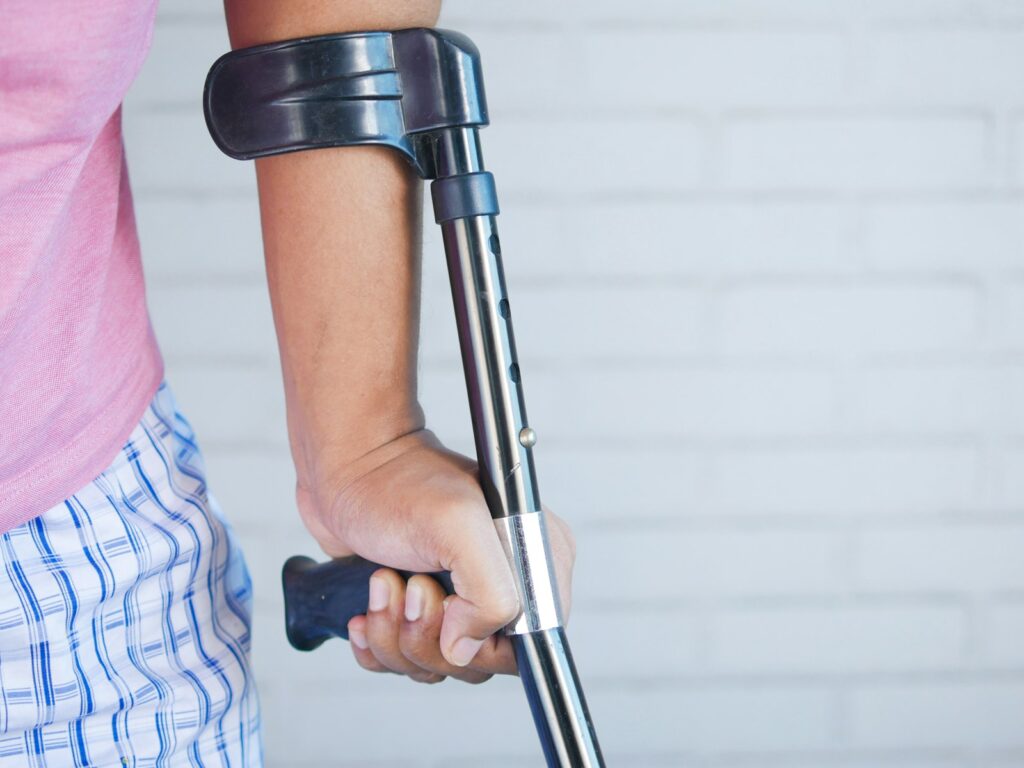
Crutches take weight off an injured leg so it can heal while you stay mobile, but they take practice. Knowing how to use crutches properly, from setting the right height to managing stairs and chairs, makes them safer and less tiring, and protects your shoulders and wrists too.
This guide is based on patient guidance from Safer Care Victoria, the Victorian Government’s healthcare quality agency. It covers fitting, walking patterns, stairs, sitting and standing, and common mistakes. It is general information only, not medical advice. Always follow the weight bearing instructions from your doctor or physiotherapist, as they depend on your injury or surgery.
The short answer
- Get your crutches fitted. Underarm crutches should sit two finger widths below the armpit. For forearm crutches, the handgrip lines up with the crease of your wrist.
- Take your weight through your hands, not your armpits, with your elbows slightly bent.
- Keep a triangle between your crutches and your good leg, and do not pivot on one foot.
- Stairs: up with the good leg first, down with the injured leg and crutches first. Use the rail when there is one.
- Wear supportive non-slip shoes, never just socks, and avoid wet or slippery floors.
Choosing and fitting your crutches
Types of crutches
Underarm (axilla) crutches have a padded top that sits against your side, below the armpit. Safer Care Victoria notes they are more stable than forearm crutches, which makes them safer if you cannot put any weight on one leg.
Forearm (elbow) crutches have a cuff around the forearm and a handgrip. They are less stable than underarm crutches, so your physio or treating team will advise which type suits you.
Older adults and people with balance problems sometimes find crutches hard to manage. A walking frame may be safer. A physio can help decide which aid suits you.
Getting the right fit
Underarm crutches
- Stand up straight with your arms loosely by your sides, wearing the shoes you will use.
- The top of each crutch should be two finger widths below your armpit.
- The handgrip should be at a height where the heel of your hand rests on it with your wrist and elbow slightly bent.
Forearm crutches
- Stand up straight with your arms loosely by your sides.
- The handgrip should line up with the crease of your wrist.
- When holding the grip, your elbow should be slightly bent, and the top of the cuff about two finger widths below your elbow.
Check that all screws are fully tightened, the rubber tips are not worn through, and underarm crutches have enough padding at the top and on the handles.
Walking with crutches
How you walk depends on how much weight you are allowed to put on the injured leg. This can range from no weight at all to full weight as tolerated.
If you cannot put weight on the injured leg
- Place both crutches a short step in front of you.
- Push your weight down through your hands.
- Hop through with your good leg, keeping the injured leg off the ground. At first, land level with the crutches. As you gain confidence, you can hop a little past them.
If you can put some weight on the injured leg
- Place both crutches a short step in front.
- Step forward with the injured leg, putting only the amount of weight you have been allowed.
- Push down through the crutches and step through with your good leg.
Always keep a triangle shape between your good leg and the two crutch tips for balance. Keep the crutches close to your feet rather than out wide. To change direction, take small steps or hops in a circle rather than twisting on your good foot.
Stairs with crutches
Safety first: take stairs slowly. If there is a rail, use it. The first few times, have someone with you, and practise with your physio before you go home if you can.
Going up
- Stand close to the bottom step with your crutches on the ground level.
- Push down through your hands and step up with your good leg first.
- Bring the injured leg and the crutches up to the same step.
Going down
- Stand close to the edge of the step, balanced.
- Put the crutches down onto the step below first, keeping the injured leg out in front if you cannot put weight on it.
- Take your weight through the crutches and step down with your good leg. Once you can take weight on the injured leg, lower the crutches, then the injured leg, then the good leg.
Using a handrail
Hold both crutches in one hand, or ask someone to carry one for you, and hold the rail with the other hand. Going up, lead with the good leg and support your weight through the rail and crutch. Going down, move the crutch and rail hand first, then the injured leg, then the good leg.
Sitting down and standing up
Sitting down
- Back up until you feel the chair touching the back of your legs.
- Hold both crutches by the handles in the hand on the opposite side to your injured leg.
- Reach back with your free hand for the armrest or seat and lower yourself down slowly.
Standing up
- Shuffle to the front of the chair.
- Hold both crutches by the handles in the hand opposite your injured leg.
- Push up using the handgrips and the chair’s armrest.
- Once standing and balanced, place a crutch in each hand or under each arm.
Common mistakes to avoid
- Leaning on the armpits. Your weight should go through your hands, not the tops of underarm crutches.
- Crutches out too wide or too far in front, which makes you less stable.
- Pivoting on the good foot to turn.
- Walking in socks or loose slippers. Wear supportive, non-slip shoes such as runners.
- Rushing stairs, especially when tired.
- Carrying things in your hands. Use a backpack, a bag across your body, or pockets.
- Ignoring the environment. Watch for wet floors, rugs, cords and pets. Our guide to preparing your home for a physio visit includes tips for clearing space.
When to see your doctor
Contact your doctor or treating team if you notice:
- calf pain, swelling, warmth or redness in either leg
- increasing pain in the injured area, or pain that stops you moving
- numbness or tingling in your hands or arms
- a fall, even if you feel unhurt
- redness, swelling or discharge from a surgical wound, or a fever
Call triple zero (000) for chest pain or sudden shortness of breath.
Frequently asked questions
How long will I need crutches?
It depends on your injury and how quickly you recover. Follow your doctor’s advice and attend all follow-up appointments.
Can I use just one crutch?
Only when your treating team says you can take enough weight on the injured leg. Your physio can show you how to make the change safely.
Which hand does a single crutch go in?
This depends on your injury and needs, so ask your physiotherapist to check your technique before you switch.
Help with crutches and recovery at home
Our physiotherapists visit homes across Melbourne and the Geelong region to check crutch fit and technique on your own stairs and in your own rooms, and to guide rehabilitation after surgery or injury. Learn about our post-surgical rehabilitation and knee replacement recovery support, then make a referral or contact our team on 03 8824 0712.

Written by
Calvin Yung, Mobile Physiotherapist
Calvin is a mobile physiotherapist at Khy Physio with a special interest in geriatric care, including mobility, balance, falls prevention and recovery after joint replacement. He speaks English, Cantonese and Mandarin. Meet Calvin