
Article & News
Rotator Cuff Physiotherapy: How Physio Helps at Home
12/05/2026 · Khy Physio
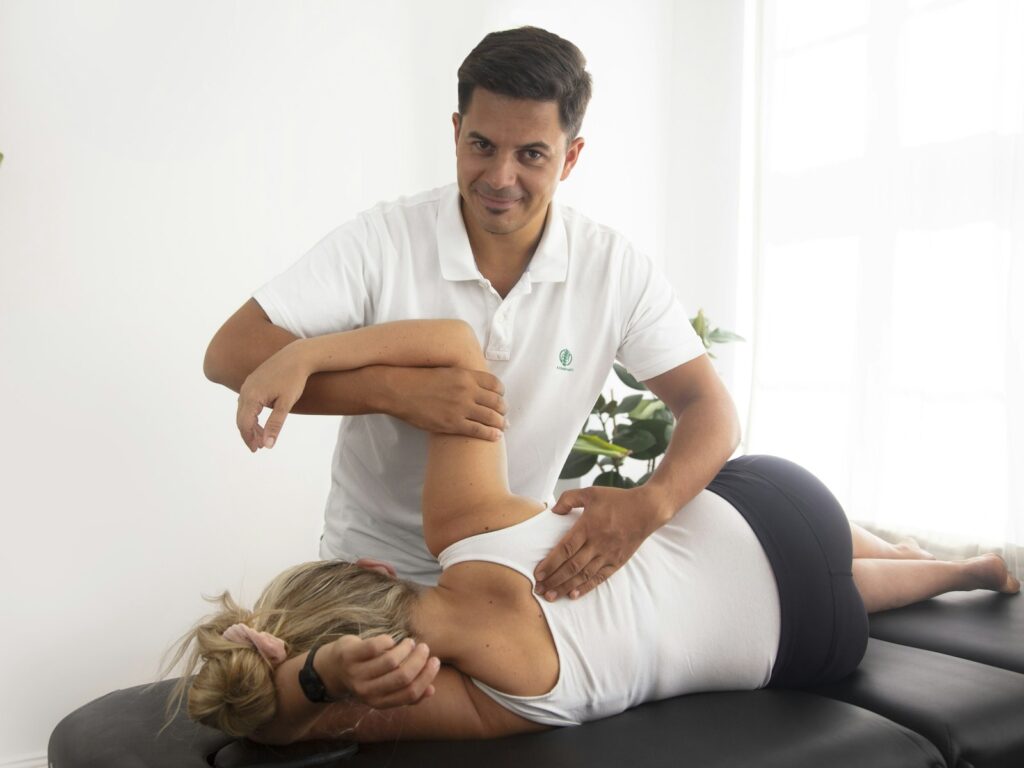
A sore, weak or stiff shoulder can make everyday tasks like dressing, reaching a top shelf or sleeping on your side surprisingly hard. The reassuring news is that rotator cuff physiotherapy helps most people recover well without an operation, using a gradual, guided plan you can do in your own home.
What is the rotator cuff, and what can go wrong?
The rotator cuff is a group of four muscles and their tendons that wrap around the top of your arm bone and hold it snugly in the shoulder socket. They give your shoulder both stability and the fine control to lift, rotate and reach. When these tendons are irritated, overloaded or torn, the shoulder can feel painful, weak and stiff.
Rotator cuff problems sit on a spectrum rather than being one single injury. Common patterns include:
- Tendinopathy — the tendon becomes irritated and sensitive, often after a change in activity or repeated overhead reaching.
- Impingement or “pinching” — the tendon is compressed as you lift the arm, causing a painful arc of movement partway up.
- Partial tears — some fibres of the tendon are damaged, but the tendon is still largely intact.
- Full-thickness tears — the tendon has torn all the way through. These become more common with age and can sometimes exist with little or no pain.
Importantly, many age-related cuff changes are a normal part of getting older, a bit like grey hair. Finding a tear on a scan does not automatically mean you need surgery, and it does not always match how much pain or difficulty you actually have.
Why physiotherapy is usually the first step
For most rotator cuff problems — including many partial and even some full-thickness tears — a well-structured exercise program is a recommended starting point. The aim is to calm the irritated tendon, restore movement, and then gradually rebuild strength so the shoulder can cope with your daily demands again.
This matters especially for older adults and people managing other health conditions, where surgery and a long recovery may carry more risk. A conservative approach lets you make steady progress at home, keep your independence, and avoid the downtime an operation involves. When a physiotherapist comes to you, they can also see the real shelves, chairs and doorways you use every day and tailor your program to them.
Recovery is rarely instant. Tendons respond slowly, and it is common to work on a program over several weeks to a few months. That patience usually pays off, and many people avoid an operation altogether.
Staged loading: rebuilding your shoulder step by step
The core idea behind rotator cuff physiotherapy is staged loading — giving the tendon the right amount of work at the right time, then building up as it gets stronger. Doing too much too soon can flare the shoulder; doing too little never rebuilds the strength you need. A physiotherapist helps you find that middle path and adjusts it as you improve. The stages below are a general guide, not a fixed timetable — your physiotherapist sets the pace based on your shoulder.
Stage 1: Settle the pain and protect movement
Early on, the focus is on reducing irritation. That might mean easing off aggravating overhead activities for a while, using gentle range-of-movement exercises to keep the joint mobile, and finding comfortable ways to rest and support the arm. Your physiotherapist may also suggest simple pain-management strategies and look at your daily habits and how you move.
Stage 2: Gentle, controlled strengthening
As pain settles, you begin light strengthening — often gentle isometric holds (pushing against a wall or your other hand without moving the joint) and small, controlled movements with a light resistance band. The aim is to wake the muscles up and build tolerance without stirring up the tendon.
Stage 3: Building real strength
Next, exercises become more challenging and closer to everyday demands. You progress the resistance and range gradually, working the cuff and the muscles around the shoulder blade so the whole shoulder moves smoothly. Some discomfort during or after exercise is often acceptable, and your physiotherapist teaches you how to tell the difference between muscles simply working and a flare-up worth easing off for.
Stage 4: Return to your activities
Finally, the plan targets the specific things you want to get back to — gardening, hanging washing, lifting a grandchild, golf or lawn bowls. Your physiotherapist fine-tunes the program so the shoulder is ready for those loads and you feel confident using it again.
Throughout these stages, a home visit means your physiotherapist can watch your technique, correct it in real time, and progress your program safely. If you are recovering after a hospital stay or managing a long-term condition, this hands-on guidance at home can make a real difference. Many people access this kind of support through their Home Care Package, the new Support at Home program, or their NDIS plan.
When is surgery considered?
Surgery is not the usual first choice, but it can be the right option for some people. A doctor and physiotherapist may discuss an operation when:
- There is a large or full-thickness tear, particularly from a recent injury such as a fall, in a younger or very active person.
- The shoulder has significant weakness — for example, real difficulty lifting the arm — that limits important daily function.
- A well-run course of physiotherapy over an appropriate period has not given enough improvement in pain or function.
- The tear is thought to be at risk of getting substantially bigger, based on a surgeon’s assessment.
The decision is very individual and depends on your age, activity level, the type of tear, your general health and what matters most to you. A surgeon (usually an orthopaedic specialist) makes that call with you, often after imaging. Even when surgery is chosen, physiotherapy is a key part of recovery both before and after the operation, helping you prepare and then rebuild strength safely.
Simple things that help day to day
While you work through your program, small changes around the home can reduce strain on a sore shoulder:
- Keep everyday items within easy reach so you avoid repeated overhead lifting.
- Break up heavy or repetitive tasks into shorter bursts with rests in between.
- Support your arm with a pillow when sitting or sleeping if that eases the ache.
- Keep moving gently — resting completely for long periods tends to stiffen the shoulder.
- Stick with your exercises consistently; little and often usually beats occasional big efforts.
When to seek prompt medical advice
This article is general information only and is not a diagnosis. See your GP or a physiotherapist for advice specific to your shoulder. Seek prompt medical care if you have sudden severe shoulder pain after a fall or accident, an obvious change in the shape of the joint, or an arm that feels numb or cold or that you cannot move at all, or if you notice signs of infection such as fever, redness and heat around the joint. Call 000 for chest pain, or pain spreading to the jaw or arm with breathlessness or sweating, or any signs of a stroke — these need emergency help, not physiotherapy.
Frequently asked questions
Can a rotator cuff tear heal without surgery?
A torn tendon does not usually knit back together on its own, but many people become pain-free and regain good function without an operation. Physiotherapy strengthens the surrounding muscles so the shoulder works well despite the tear, which is why conservative care so often succeeds.
How long does rotator cuff physiotherapy take?
It varies with the type of problem and how it responds, but tendons change slowly, so many people work on a program over several weeks to a few months. Your physiotherapist will set realistic milestones and adjust the plan as your shoulder improves.
Should I rest my shoulder or keep it moving?
Usually a balance of both. In the short term you may ease off the movements that really aggravate it, but gentle, guided movement and gradual strengthening are what rebuild the shoulder. Complete rest for weeks tends to leave it stiff and weak. A physiotherapist helps you judge the right amount.
Can a physiotherapist treat my shoulder at home?
Yes. Rotator cuff programs are well suited to in-home care — your physiotherapist assesses your shoulder, teaches and progresses your exercises, and uses everyday objects around your home so the plan fits your real life. We visit clients across Melbourne and the Geelong region.
Ready to get your shoulder moving again?
You do not have to push through shoulder pain alone. Our physiotherapists come to you, assess what is going on, and build a safe, staged plan to help you get back to the things you enjoy. To arrange an in-home assessment, make a referral or reach out through our contact page — we would be glad to help. If you would like to understand funding, our funding and pricing page explains your options, including NDIS, Home Care Packages, Support at Home and DVA.

Written by
Calvin Yung, Mobile Physiotherapist
Calvin is a mobile physiotherapist at Khy Physio with a special interest in geriatric care, including mobility, balance, falls prevention and recovery after joint replacement. He speaks English, Cantonese and Mandarin. Meet Calvin