
Article & News
Parkinson’s Exercises for Balance and Fewer Falls
22/05/2026 · Khy Physio
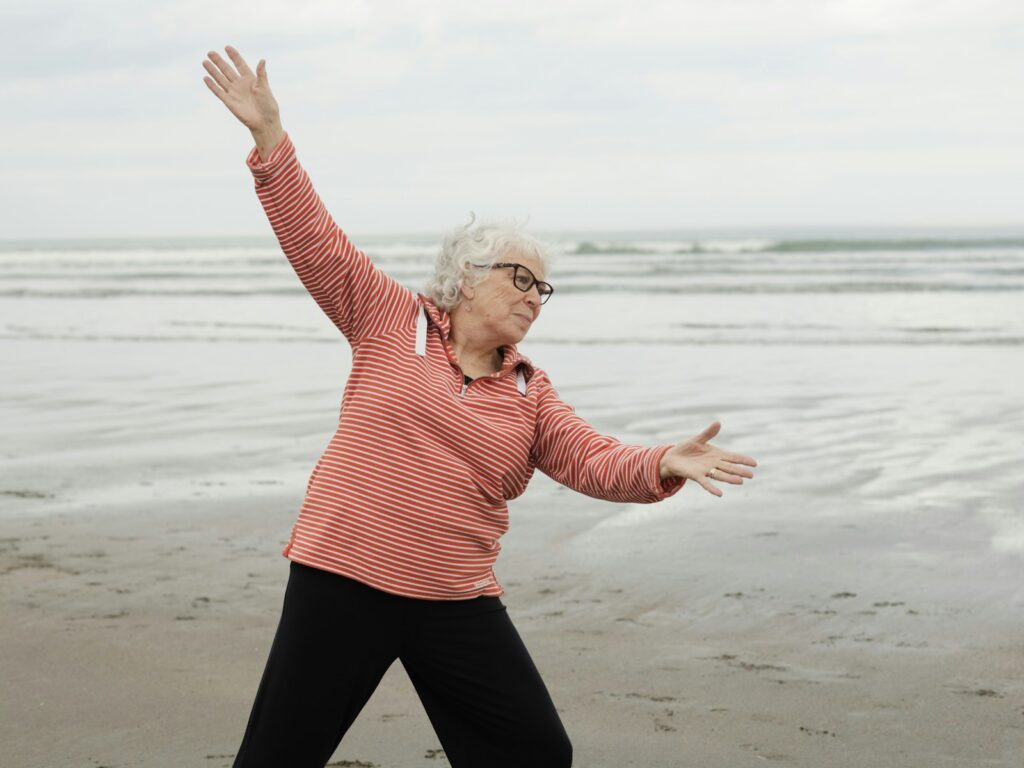
If you or someone you care for is living with Parkinson’s, the right kind of movement can make a real difference to balance, walking and confidence at home. This guide explains the types of Parkinsons exercises that help most with mobility and falls, how to stay active safely in your own home, and where funding like the NDIS fits in.
This is general information only, not personal medical advice or a diagnosis. Everyone’s Parkinson’s is different, so please check with your GP, neurologist or a physiotherapist before starting a new routine, so it can be tailored to you.
Why movement matters so much in Parkinson’s
Parkinson’s tends to make movements smaller and slower over time. Steps get shorter, arm swing fades, turning becomes stiff, and posture can drift forward. These changes are a big part of why balance feels less steady and why falls become more likely. The encouraging news is that movement is one of the most useful tools for managing symptoms alongside your medication.
Regular, purposeful Parkinsons exercises can help you keep walking further, turn more safely, get in and out of a chair or bed more easily, and stay confident on your feet. The catch is that the movements need to be big, deliberate and practised often, because Parkinson’s quietly under-scales movement without you realising it.
The most helpful types of Parkinsons exercises
No single exercise fixes everything. A good program usually blends several kinds of movement, matched to where you are with your condition.
Big, amplitude-based movements
Because Parkinson’s shrinks movement, a lot of physiotherapy focuses on deliberately making movements bigger than they feel necessary. This is the idea behind amplitude-based approaches such as LSVT BIG and PD Warrior. You practise large, exaggerated reaching, stepping and twisting, with plenty of repetition, to help retrain your body to move at a more normal size. Over time that carries into everyday tasks like walking, dressing and rolling over in bed.
Balance and stability training
Balance work challenges your body to stay steady while you shift weight, turn your head, step in different directions, or stand on a narrower base. This might mean standing with your feet closer together while holding a bench, stepping over a line on the floor, or practising controlled turns. Done regularly and safely, this is one of the most direct ways to lower your falls risk.
Gait and walking practice
Walking practice targets the short, shuffling steps that Parkinson’s can cause. Physiotherapists often use cues, such as counting, marching to a beat, or stepping over a target on the floor, to help you take longer, more even steps. This is especially useful if you experience “freezing”, where your feet feel stuck to the ground, particularly in doorways or when turning.
Strength and posture work
Gentle strengthening for the legs, hips and trunk helps you rise from a chair, manage steps and stay upright. Posture and back-extension exercises counter the forward-stooped position that can develop, which in turn supports balance and breathing.
Dual-task and coordination practice
In daily life we rarely just walk, we walk while talking or carrying something. Dual-task exercises, such as walking while naming animals or holding a cup, help you cope with those real situations more safely. Rhythm-based activities like boxing-style movements, dancing or tai chi can be enjoyable ways to work on balance and big movements too.
Staying active safely at home
You don’t need a gym to benefit. Small amounts of good-quality movement, done most days, add up. A few practical pointers:
- Move often. Short daily sessions usually beat one long weekly effort, and try to break up long periods of sitting.
- Time it with your medication. Many people move best when their medication is working well (“on” time). Ask your physiotherapist, GP or neurologist about the best window for you.
- Make it big and controlled. Focus on large, deliberate movements rather than rushing.
- Set up for safety. Keep a sturdy bench, rail or chair within reach for balance work, wear supportive footwear, and clear trip hazards like loose rugs and cords.
- Have someone nearby. For balance and standing exercises, especially early on, it’s safer to have a carer or family member close by.
An in-home physiotherapist can build a routine that fits your home, your energy levels and your goals, then adjust it as things change. Because Khy Physio comes to you, we can practise the exact movements that matter in your own kitchen, hallway and bathroom, where falls most often happen. You can book an in-home visit whenever you’re ready.
Reducing falls with Parkinson’s
Falls are common in Parkinson’s, but many are preventable. Alongside exercise, it helps to look at the whole picture: your walking aid (if you use one), lighting, footwear, and hazards around the home. A physiotherapist can assess your balance, watch how you actually move around your home, and recommend practical changes and targeted exercises for your specific risks.
Please seek urgent care if a fall causes a hard knock to the head, a suspected fracture, or you can’t get up. Call 000 for signs of a stroke (sudden facial droop, arm weakness, or slurred speech), chest pain, or a serious injury. For ongoing falls, or a noticeable change in your walking or balance, arrange a review with your GP or physiotherapist rather than pushing through.
How the NDIS and other funding can help
Cost shouldn’t be a barrier to staying mobile. Depending on your situation, in-home physiotherapy for Parkinson’s may be funded in several ways:
- If you’re under 65 and Parkinson’s significantly affects your daily life, NDIS physiotherapy can fund regular sessions, often under capacity building supports, to help you maintain function and independence.
- If you’re older, a Home Care Package or the new Support at Home program can include physiotherapy and mobility support at home.
- Veterans may be covered through DVA, and some people access a short course of care through a Medicare care plan arranged by their GP.
If you’re not sure which pathway fits, our team can talk it through with you. You can also read more about funding and pricing or check the suburbs we cover across Melbourne and the Geelong region.
Working with a physiotherapist
Parkinson’s changes over time, so exercises that suit you now may need adjusting later. A physiotherapist experienced in neurological conditions can assess your movement, set realistic goals, teach the safest technique, and progress your program as you improve or as your needs change. For older adults in particular, our seniors physiotherapy and aged care physiotherapy services are built around comfort, safety and confidence at home.
Frequently asked questions
How often should someone with Parkinson’s exercise?
Most guidance encourages some movement on most days of the week, combining balance, walking, strength and big-movement practice. What matters most is consistency and safety. A physiotherapist can help you find a realistic amount that suits your energy and stage of Parkinson’s without overdoing it.
Can exercise stop Parkinson’s from getting worse?
Exercise isn’t a cure, and Parkinson’s is a progressive condition. However, staying active is one of the best things you can do to manage symptoms, keep moving well, and hold onto your independence and confidence for longer. It works best alongside your prescribed medication and regular medical reviews.
Is it safe to do balance exercises at home?
Balance exercises can be very safe when they’re set up properly, with a sturdy support nearby and, ideally, someone with you at first. The safest approach is to have a physiotherapist assess you, show you the right technique, and match the difficulty to your ability so you’re challenged without being put at risk.
Will the NDIS pay for physiotherapy for Parkinson’s?
If Parkinson’s significantly affects your day-to-day function and you’re an eligible participant, physiotherapy is often funded through your NDIS plan. The exact supports depend on your individual plan and goals, so it’s worth reviewing this with your planner, support coordinator, or our team.
Ready to feel steadier on your feet?
Staying active is one of the most powerful ways to manage Parkinson’s, protect your balance and reduce falls, and you don’t have to work it out alone. Our friendly physiotherapists come to you, at home, to build a safe, tailored program around your goals. Book an in-home assessment today, or phone our team for a warm, no-pressure chat about how we can help.

Written by
Calvin Yung, Mobile Physiotherapist
Calvin is a mobile physiotherapist at Khy Physio with a special interest in geriatric care, including mobility, balance, falls prevention and recovery after joint replacement. He speaks English, Cantonese and Mandarin. Meet Calvin