
Article & News
Gardening without back pain: a spring guide for older gardeners
08/10/2026 · Khy Physio
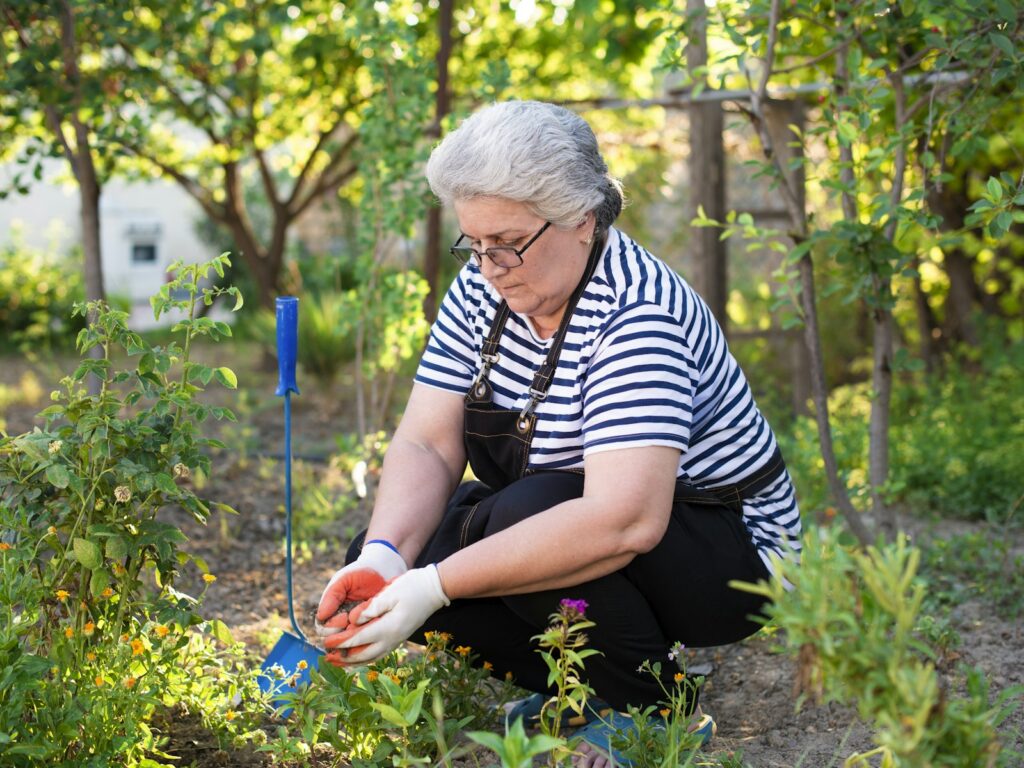
Spring in Melbourne brings everyone back into the garden, and for many older gardeners it also brings a sore back by Monday morning. Gardening without back pain is mostly about pacing, setting up your tools and positions well, and warming up before a big session. You do not have to give up the garden to look after your back.
This guide covers how to plan a gardening session, lift and kneel more comfortably, choose tools that suit you, and when back pain needs a doctor. It is general information only, not medical advice. If you have an existing back condition, osteoporosis or a joint replacement, check with your physiotherapist or GP about what is right for you.
The short answer
- Avoid long sessions. Break the work into short blocks and swap tasks often, for example after 15 minutes of raking, move on to pruning.
- Warm up first with a short walk and gentle movements, and rest in the shade with a drink.
- Bend at the knees and hips, keep loads close, and get help with anything heavy.
- Use a kneeler with handles, long-handled tools, raised beds or pots to reduce bending.
- Garden in the cooler parts of the day and protect yourself from the sun.
- See a doctor urgently if back pain comes with leg weakness or numbness, bladder or bowel changes, or fever.
Why the garden is hard on backs
Gardening is great exercise, and it can count towards the 30 minutes or more of moderate activity on most days that Australia’s 24-hour movement guidelines recommend for older adults. The trouble is how we tend to do it: hours bent over a garden bed, repeated twisting, and lifting heavy bags after months of lighter winter activity.
The Better Health Channel notes that gardening can cause back pain and overuse injuries, and recommends avoiding long sessions, warming up, rotating tasks, resting often and avoiding uncomfortable positions. The tips below put that into practice.
Plan your session: pacing is the secret
- Start small. After winter, your first few sessions should be shorter than you think you need. Build up over a few weekends.
- Mix your tasks. Alternate bending jobs (weeding) with upright jobs (pruning, watering) and walking jobs (carrying light loads, sweeping).
- Set a timer. A phone timer every 15 to 20 minutes is a simple reminder to stand up, stretch and change task.
- Stop before you are sore. The job will still be there tomorrow. Ending while you still feel good makes it easier to come back.
- Choose the right time. Garden in the early morning or late afternoon, avoiding the hottest part of the day. The Better Health Channel suggests checking the daily UV alert and covering up when the UV is 3 or above.
A 5 minute warm-up before you start
Cold muscles do not like sudden digging. Try this before you pick up a tool.
Safety first: hold a stable surface, such as an outdoor bench or a sturdy fence, for any move where you feel unsteady. Move gently, and stop if pain is sharp. If you have osteoporosis, avoid forceful bending and twisting and ask your physio which movements suit you. Our osteoporosis safe exercise guide has more.
1. Walk the garden
- Walk around your garden at an easy pace for 2 to 3 minutes.
- Swing your arms gently as you go.
2. Shoulder rolls
- Stand tall with your arms relaxed.
- Roll your shoulders up, back and down in slow circles, then reverse.
3. Sit to stand
- Sit on a firm garden chair with your feet flat.
- Lean forward slightly and stand up, then sit back down slowly.
- Repeat a few times. This warms up the leg muscles you will use for lifting and getting up from the ground.
4. Gentle hip hinge
- Stand holding a bench or fence with both hands.
- Keeping your back long, bend at the hips and knees as if about to sit, then stand tall again.
- Repeat slowly a few times. This is the movement pattern to use when picking things up.
Lifting, kneeling and the right tools
Lifting, carrying and digging
- Bend at the knees and hips, not just the back. Keep the load close to your body and avoid twisting while holding it. Turn by moving your feet.
- Make loads smaller. Half-fill watering cans and buckets, and buy potting mix and fertiliser in smaller bags where you can.
- Use a trolley or wheelbarrow. Let wheels do the carrying.
- Ask for help. If an object is too heavy, the Better Health Channel’s advice is simple: get help rather than strain.
- Dig little and often. Take small shovelfuls and pause between them. Step towards where you are tipping the soil instead of twisting.
Kneeling, weeding and working low
Low work is where most backs complain. Some options:
- A garden kneeler with handles. The pad protects your knees and the handles give you something to push on when standing up. Many flip over to become a low seat.
- Half kneeling. One knee down and one foot flat is often more comfortable than kneeling on both knees or bending from standing. Swap sides regularly.
- Sit to weed. A low stool or garden seat lets you work at ground level without holding a bent position.
- Bring the garden up to you. Raised beds, tall pots and vertical planters mean less bending altogether.
- Getting up from the ground. Roll onto your hands and knees, move close to a sturdy support, bring one foot forward and push up using the support. If this is hard, practise it with your physio before you need it in the garden.
Tools that save your back
- Long-handled tools for weeding, planting and picking up debris reduce stooping.
- The right size for you. The Better Health Channel advises choosing tools that fit your hand and keeping your wrist in a straight line, which reduces the effort needed.
- Lightweight hoses and hose reels reduce dragging and pulling.
- Kneelers, stools and trolleys as above.
Other spring safety points
- Potting mix: it can carry Legionella bacteria. Wear gloves and a mask, open bags slowly away from your face, dampen the mix, and wash your hands afterwards.
- Ladders: avoid climbing where you can, and never stand on the top rungs. A fall from a ladder can cause serious injury. Our falls prevention guide covers other outdoor hazards.
- Hydration and shade: take regular breaks in the shade with a drink of water.
When to see your doctor
A little stiffness the day after a big session is common and usually settles. Keep moving gently; our article on whether to move or rest with lower back pain explains why.
Healthdirect advises calling triple zero (000) or going to an emergency department if:
- the pain has come on very quickly and is severe
- the pain follows a significant injury or accident, such as a fall from a ladder
- you have a fever or feel unwell as well as the pain
- you cannot walk or move because of the pain
- you have muscle weakness or numbness in your legs, or changes to bladder or bowel function
- you have had unexplained weight loss
See your doctor if back pain is not improving after about 6 weeks, or is affecting your sleep or daily activities.
Frequently asked questions
Is it better to kneel or bend when weeding?
For most people, kneeling on a padded kneeler or sitting on a low stool is kinder to the back than bending from standing for long periods. Change position often either way.
Should I stop gardening if my back hurts?
Not usually. Scale back, shorten sessions and choose lighter tasks while it settles. If you have any of the warning signs above, see a doctor first.
Can a physio help me keep gardening?
Yes. A physio can assess your back, strength and balance, then set exercises that prepare you for the jobs you love, such as getting up from the ground or lifting pots.
Keep enjoying your garden
Our physiotherapists visit homes across Melbourne and the Geelong region, so we can see your garden, your steps and your favourite jobs, and build a plan around them. Learn about our musculoskeletal mobile physiotherapy, then make a referral or contact our team on 03 8824 0712.

Written by
Calvin Yung, Mobile Physiotherapist
Calvin is a mobile physiotherapist at Khy Physio with a special interest in geriatric care, including mobility, balance, falls prevention and recovery after joint replacement. He speaks English, Cantonese and Mandarin. Meet Calvin