
Article & News
Foot Drop Physiotherapy: Walk Safer at Home
17/04/2026 · Khy Physio
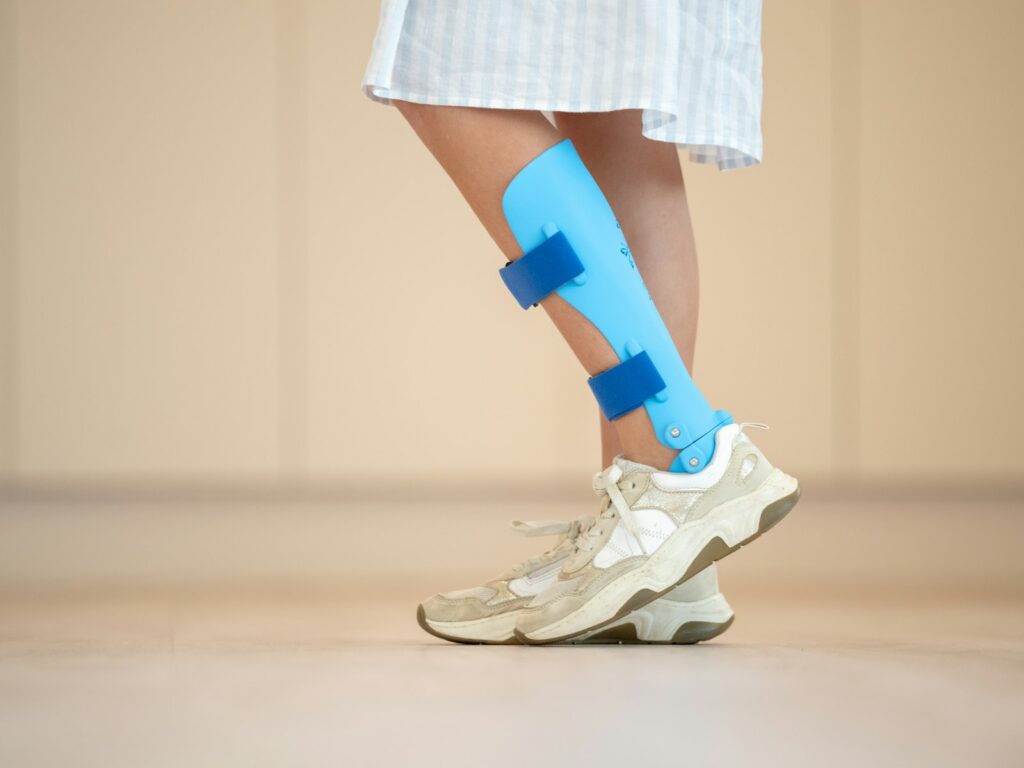
If the front of one foot keeps catching on the floor, the stairs or the edge of a rug, you may be dealing with foot drop. It can make walking feel unpredictable and raise the risk of a trip or fall, but foot drop physiotherapy, often paired with a simple ankle brace, can help you move around your home more safely and confidently.
What is foot drop?
Foot drop (sometimes called “drop foot”) is difficulty lifting the front of the foot upward, a movement physiotherapists call dorsiflexion. Normally, as you swing your leg through a step, the muscles on the front of your shin lift your toes so the foot clears the ground. When those muscles are weak or not receiving the right signals from the nerves, the toes point down and the foot can drag or slap the floor.
Foot drop is not a disease in itself. It is a sign that something is affecting the nerves or muscles that control the foot. It can come on suddenly or gradually, and it usually affects one foot, though occasionally both. Working out the underlying cause matters, because it guides both the treatment and whether medical investigation is needed.
Signs you might notice
- Your toes catch or scuff on floors, carpet edges, kerbs or the lip of a step.
- You hear a “slapping” sound as the foot lands.
- You lift your knee higher than usual (a “high-stepping” walk) to clear the foot.
- You feel less stable, especially on uneven ground, ramps or in the dark.
- There may be numbness, tingling or weakness in the foot or lower leg.
Common causes of foot drop
Because foot drop is a symptom, the cause can sit anywhere along the path from the brain and spinal cord down to the nerve and muscle in the leg. Common contributors include:
- Nerve compression at the knee. The common peroneal (fibular) nerve runs close to the surface near the outside of the knee. Prolonged pressure — for example from habitually crossing the legs, a long period in bed or a plaster cast — can affect it.
- Lower-back problems. A pinched nerve in the lower spine, such as from a disc, can affect the muscles that lift the foot.
- Stroke and other brain conditions. Foot drop is common after a stroke.
- Neurological conditions such as multiple sclerosis, Parkinson’s disease or motor neurone disease.
- Nerve injury after hip or knee surgery, a fracture, or a period of significant illness.
- Diabetes and other conditions that can affect the nerves over time.
Some causes settle and improve; others are ongoing and need long-term management. This is why a physiotherapist will usually encourage you to have the cause properly investigated rather than treating the foot in isolation.
When the cause should be investigated
This article is general information only, not personal medical advice. Please see your GP promptly if foot drop appears suddenly, follows a fall or injury, or comes with any warning signs. Foot drop that starts abruptly alongside new weakness, drooping of the face, slurred speech or confusion could indicate a stroke — call 000 immediately. Sudden severe back or leg pain, numbness around the groin or buttocks, or loss of bladder or bowel control needs emergency assessment the same day, as does rapidly worsening weakness in both legs.
For foot drop that has come on gradually, it is still worth seeing your GP so the cause can be identified. Depending on what they find, they may arrange nerve or imaging tests, or refer you to a specialist. A physiotherapist works alongside your medical team — we are happy to flag concerns and suggest further assessment when something needs a doctor’s eye.
How physiotherapy helps foot drop
Foot drop physiotherapy has two broad goals: to help the foot and leg work as well as they can, and to keep you walking safely while that happens. What your program looks like depends on the cause and how much movement you have, so an individual assessment always comes first.
Restoring strength and movement
Where there is some muscle activity, your physiotherapist may guide you through gentle, progressive exercises to strengthen the muscles that lift the foot, along with stretches to keep the ankle and calf from tightening. Ankle flexibility matters, because a stiff, downward-pointing foot is harder to manage and more likely to catch. Depending on the cause, your physio might also use techniques to help retrain the nerves, muscles and your overall walking pattern.
Retraining safe walking and preventing falls
Foot drop changes how you walk, and compensations such as swinging the leg out to the side can strain your hip, knee and back. A physiotherapist can help you relearn a smoother, more efficient step and practise clearing steps and kerbs safely. Because a dragging foot is a genuine trip hazard, falls prevention is central to treatment — and seeing you in your own environment is a real advantage. Your physiotherapist can spot the specific rugs, thresholds, cords and steps that catch your foot, suggest practical changes, and rehearse the routes you actually use every day.
Aids and equipment: how an AFO helps
Many people with foot drop benefit from an ankle-foot orthosis (AFO) — a lightweight brace, usually worn inside the shoe, that holds the foot in a better position so the toes clear the ground as you swing your leg through. By stopping the foot from dropping, an AFO can make walking feel steadier and less tiring, and it reduces the risk of catching your toes and stumbling.
AFOs come in different styles, from simple off-the-shelf braces to custom-made devices, and some people use other supports such as a foot-up strap. There is no single “best” option — the right choice depends on your cause, your strength, your footwear and your goals. Your physiotherapist can assess which type may suit you, help you get used to wearing it, and check it fits comfortably without rubbing. Well-fitting, supportive shoes with a firm heel also make a real difference. An AFO is not always forever: for some people it is a temporary aid while strength returns, and for others it is a longer-term support that keeps them active and safe.
Funding your in-home physiotherapy
Home visits mean you get help where you actually walk — no travelling or waiting for transport. Depending on your situation, foot drop physiotherapy and equipment such as an AFO may be covered through several funding pathways. If you live with a permanent or significant disability, NDIS physiotherapy may fund assessment, treatment and assistive equipment. Older adults can often use a Home Care Package or the newer Support at Home program to include physiotherapy, and veterans may be eligible through DVA. Other options include Medicare care plans, TAC, WorkCover and private funding. If you are not sure what applies to you, our funding and pricing page explains the main pathways, and the team is happy to talk it through.
Frequently asked questions
Can foot drop be cured, or is it permanent?
It depends entirely on the cause. Foot drop from a temporary nerve compression often improves, sometimes fully, as the nerve recovers. When it is linked to an ongoing neurological condition or a permanent nerve injury, the aim shifts to managing it well — building strength where possible and using aids like an AFO to keep you walking safely. An assessment with a physiotherapist, alongside your GP’s investigation of the cause, is the best way to understand your outlook.
Is it safe to keep walking with foot drop?
Staying active is usually encouraged, but the tripping risk is real, so it is worth getting the right support in place. A physiotherapist can suggest an aid such as an AFO, recommend safer footwear, help reduce trip hazards around your home and build your walking confidence. If your walking has suddenly become much worse, see your GP before pushing on.
Do I need a referral to see a physiotherapist for foot drop?
You can usually book a physiotherapy assessment directly, without a referral. That said, some funding pathways and care plans do require paperwork, and because foot drop always has an underlying cause, we often recommend seeing your GP as well so it can be properly investigated. We are glad to work in with your doctor and any specialists.
Which areas do you visit?
Our physiotherapists travel to homes, aged-care facilities and community settings across Melbourne and the Geelong region. You can check the suburbs we cover or simply contact the team to confirm we come to you.
Ready to walk more safely?
You do not have to put up with catching your toes or feeling unsteady on your feet. A physiotherapist can assess your foot drop in your own home, recommend the right exercises and aids, and help you move with more confidence. Book an in-home assessment or phone the Khy Physio team today — we would be glad to help you take the next step, safely.

Written by
Calvin Yung, Mobile Physiotherapist
Calvin is a mobile physiotherapist at Khy Physio with a special interest in geriatric care, including mobility, balance, falls prevention and recovery after joint replacement. He speaks English, Cantonese and Mandarin. Meet Calvin