
Article & News
Spinal stenosis physiotherapy: easing leg pain so you can walk further
20/10/2026 · Khy Physio
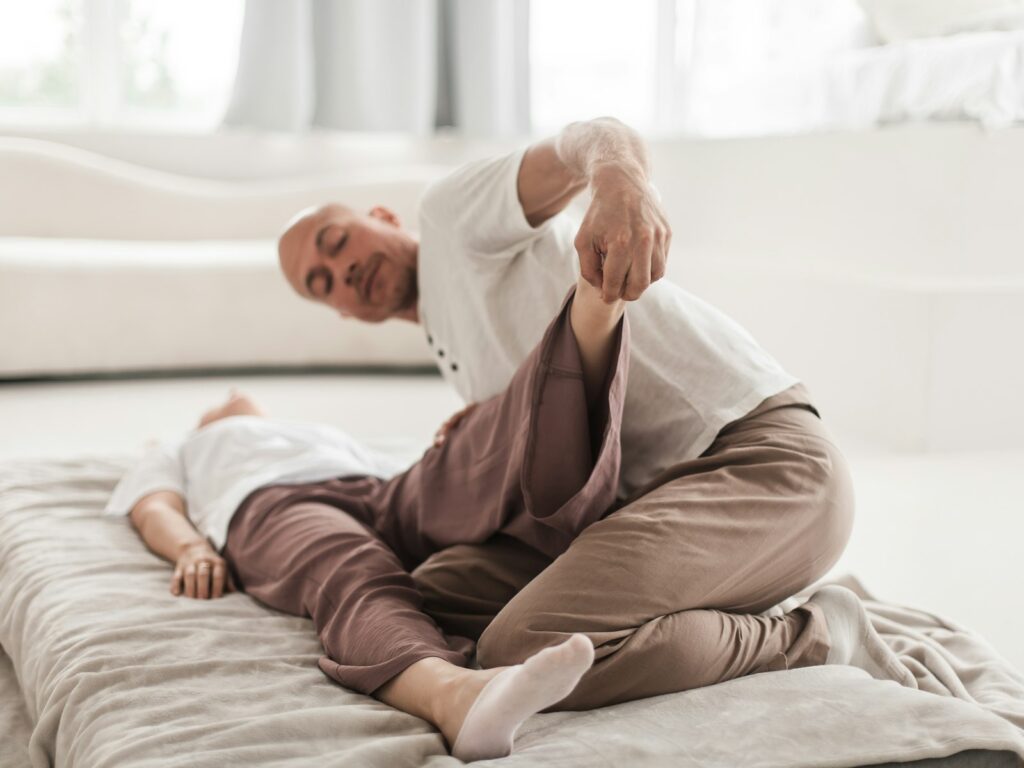
If your legs ache, tingle or feel heavy when you walk or stand for a while, and the feeling eases when you sit down or lean forward on a shopping trolley, lumbar spinal stenosis may be part of the reason. Physiotherapy is one of the main non-surgical options for spinal stenosis. It focuses on easing symptoms, keeping you strong and, above all, helping you walk further before you need to stop.
This guide explains what spinal stenosis is, why bending forward often brings relief, the exercises a physio commonly uses, and the symptoms that need a doctor quickly. It is general information only, not medical advice. Please see your GP or physiotherapist about your own situation.
The short answer
- Lumbar spinal stenosis is a narrowing of the space around the nerves in the lower back. It is a common cause of leg pain with walking in older adults.
- Symptoms are often worse with standing, walking or leaning back, and eased by bending forward, sitting or lying down.
- A 2022 systematic review found moderate-quality evidence that a program combining hands-on treatment and exercise, with or without education, is an effective treatment.
- A good physio program aims to increase how far and how long you can walk, not just to reduce pain.
- New bladder or bowel problems, numbness between the legs or quickly weakening legs need urgent medical care.
What is lumbar spinal stenosis?
Your spinal nerves run through a canal in the bones of your back. With age, changes such as thickened ligaments, bulging discs and arthritic joints can narrow this space. When the narrowing irritates the nerves, you may feel it in your buttocks and legs rather than your back.
A clinical review in the BMJ describes lumbar spinal stenosis as pain in the buttocks or legs, with or without back pain, that is often made worse by standing, walking or arching backwards and relieved by bending forward, sitting or lying down. The same review points out two things worth knowing:
- Scans do not tell the whole story. Many older people show narrowing on a scan without any symptoms at all, so treatment is guided by how you feel and function, not by the picture alone.
- Rapid worsening is rare. Symptoms often come and go or gradually improve, which is why surgery is usually only considered when troublesome symptoms continue despite other treatment.
Typical symptoms include aching, cramping, heaviness, pins and needles or numbness in the buttocks, thighs or calves that builds up the longer you walk or stand. Many people notice they can walk much further leaning on a shopping trolley or a walker, because it lets them bend slightly forward.
Why bending forward helps
Bending forward tends to give the nerves in the lower back a little more room, while standing tall or leaning back reduces it. This is why people with stenosis often stoop when walking, prefer sitting to standing, and feel better after a rest on a bench.
Physiotherapy uses this pattern rather than fighting it. Exercises that gently bend the lower back forward can ease symptoms, and activities done leaning slightly forward, such as riding an exercise bike or walking with a wheeled walker, are often more comfortable. The aim is to find comfortable ways to stay active while you build strength and walking tolerance.
How physiotherapy helps spinal stenosis
A 2022 update of a Cochrane review, published in BMJ Open, found moderate-quality evidence that a multimodal approach including manual therapy and exercise, with or without education, is an effective treatment for stenosis that causes leg symptoms with walking. In practice, a home program usually covers:
- Assessment of your walking. Your physio notes how far or how long you can walk before symptoms start, and what eases them. This becomes the baseline you work to improve.
- Hands-on treatment. Gentle mobilisation of the spine and hips, used alongside exercise rather than instead of it.
- Flexion-based and strengthening exercise. Movements that ease symptoms, plus strength work for the hips, thighs and trunk.
- A graded walking plan. Structured walking that slowly increases your distance.
- Balance and falls prevention. Leg numbness and weakness can affect balance, so this is checked and trained too.
- Advice on daily activities. Ways to manage standing tasks like cooking or queuing, such as resting one foot on a low step.
Exercises a physio commonly uses
These are examples only. Your physio will choose and adjust exercises for you. Do lying exercises on your bed rather than the floor if getting down and up is difficult. Move slowly, breathe normally, and stop if pain becomes sharp or if leg symptoms spread further down your leg.
1. Single knee to chest
- Lie on your back on the bed with both knees bent.
- Hold behind one thigh and gently draw that knee towards your chest until you feel a comfortable stretch in your lower back.
- Hold for a few breaths, lower slowly, then repeat with the other leg.
2. Seated forward lean
- Sit on a firm, stable chair with your feet flat and apart.
- Slowly slide your hands down your shins, letting your back round forward.
- Pause for a few breaths, then use your hands on your thighs to push back up to sitting. Skip this one if bending forward makes you dizzy.
3. Pelvic tilt
- Lie on your back with your knees bent.
- Gently flatten your lower back into the bed by tightening your tummy muscles and tilting your pelvis.
- Hold for a few seconds, then relax.
4. Sit to stand
- Sit near the front of a firm chair with your feet slightly behind your knees.
- Lean forward and stand up, using your hands on the armrests if you need to.
- Sit back down slowly and with control. Have a stable surface in front of you if your balance is uncertain.
Walking further: a simple interval approach
Many people with stenosis stop walking altogether because it hurts. Unfortunately that leads to weaker legs, poorer fitness and less confidence. A paced approach usually works better:
- Find your starting point. Walk at a comfortable pace until symptoms start to build, then stop. Note the time or distance.
- Rest in a helpful position. Sit down, or lean forward on a bench, rail or your walker until the symptoms settle.
- Repeat. Do a few walk-and-rest rounds, as long as symptoms settle each time.
- Build slowly. Every week or so, add a little time to each walking block if the previous level felt manageable.
A wheeled walker with a seat can make this much easier outdoors, because you can lean forward while walking and sit down whenever you need to. Your physio can check whether one suits you and set it to the right height.
When to see your doctor urgently
Most stenosis symptoms change slowly. Some symptoms, though, can signal serious nerve compression or another cause and need prompt medical care. Go to an emergency department or call 000 if you have:
- New difficulty passing urine, or loss of control of your bladder or bowel.
- Numbness in the saddle area, between your legs or around your bottom.
- Weakness in one or both legs that is getting worse quickly, or a foot that has started to drag.
See your GP soon if you have back or leg pain with fever or feeling unwell, unexplained weight loss, a history of cancer, back pain after a fall, or pain that is constant and does not ease with any change of position. Leg pain with walking can also come from narrowed arteries in the legs, so your GP may check your circulation. Our guide to lower back pain lists further red flags.
Frequently asked questions
Will I need surgery for spinal stenosis?
Not necessarily. Surgery is almost always a planned decision, usually considered only when bothersome symptoms continue despite less invasive treatment. Physiotherapy is a common first step, and your GP or specialist can talk through the options with you.
Is walking good for spinal stenosis?
Yes, when it is paced. Walking in short blocks with rests, and building up gradually, keeps your legs strong and your heart healthy without pushing symptoms too far.
Is spinal stenosis the same as sciatica?
They can overlap, because both involve irritated nerves that cause leg symptoms. Stenosis is one possible cause of sciatica-type pain. Our article on whether physio can help sciatica explains more.
Can I have physio for stenosis at home?
Yes. Khy Physio is a mobile practice, so your physio comes to you and can plan your walking program around your own street, stairs and furniture. Many people use a GP chronic condition management plan, DVA, Support at Home or private health cover to help with the cost. See does Medicare cover physio for the current plan rules.
Ready to walk further with less pain?
Our musculoskeletal physiotherapists visit homes across Melbourne and the Geelong region to assess and treat spinal stenosis. Make a referral or contact our team on 03 8824 0712 to book a home visit.

Written by
Calvin Yung, Mobile Physiotherapist
Calvin is a mobile physiotherapist at Khy Physio with a special interest in geriatric care, including mobility, balance, falls prevention and recovery after joint replacement. He speaks English, Cantonese and Mandarin. Meet Calvin