
Article & News
Spinal cord injury physiotherapy at home: community rehab, equipment and funding
28/10/2026 · Khy Physio
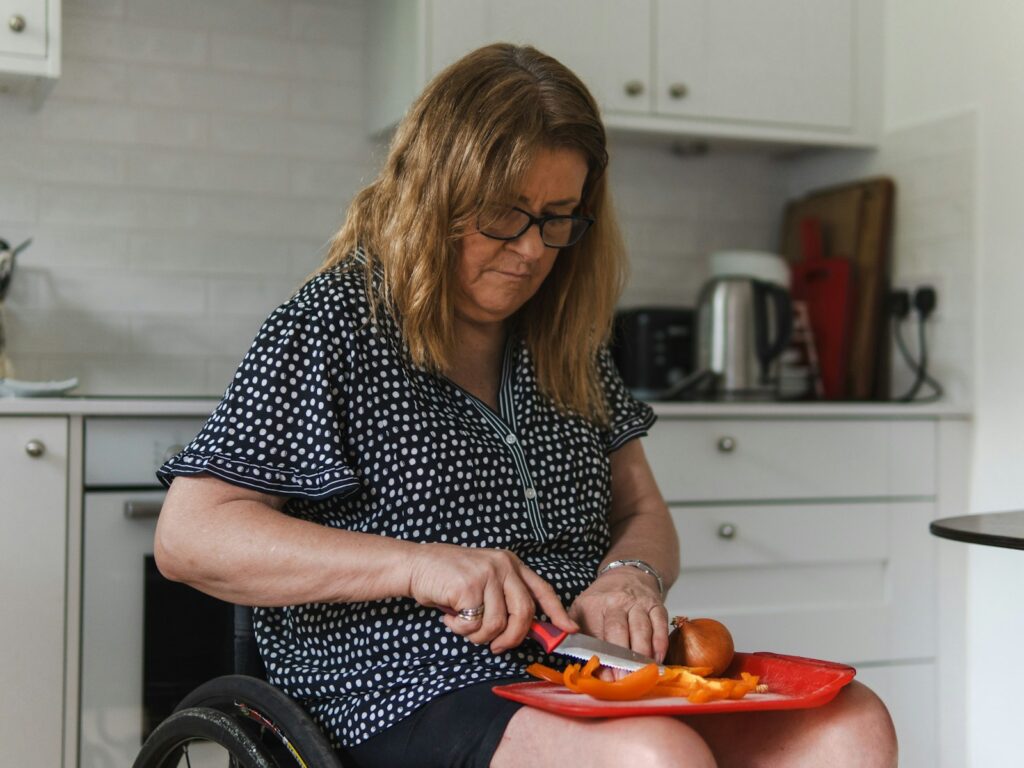
Leaving a spinal unit or rehab hospital is a big step, and it is rarely the end of rehabilitation. Spinal cord injury physiotherapy at home and in the community helps you build on what you learned in hospital, keep your body strong and healthy for the long term, and work towards goals that matter in your own life, from transfers and wheelchair skills to fitness, standing or walking where that is possible.
This guide explains what community physio for spinal cord injury (SCI) can include, the international exercise guidelines, equipment, key safety issues and funding. It is general information only, not medical advice. Please follow the advice of your spinal team, GP and physiotherapist for your own situation.
The short answer
- Community physio after SCI focuses on your goals: strength, fitness, transfers, wheelchair skills, sitting balance, managing spasticity and, for some people, standing or walking.
- International guidelines recommend adults with SCI do at least 20 minutes of moderate to vigorous aerobic exercise twice a week, plus strength exercises twice a week, for fitness and strength.
- For heart and metabolic health, at least 30 minutes of moderate to vigorous aerobic exercise 3 times a week is suggested.
- People with an injury at or above the sixth thoracic level (T6) can develop autonomic dysreflexia, which can need immediate medical attention.
- Physio may be funded through the NDIS, TAC, WorkCover or other schemes depending on how and when you were injured.
What community physio for SCI can include
Hospital gyms are designed for rehab. Home is not. The bed you transfer from each morning, the height of your toilet, the step at your front door and the car you travel in are where skills need to work. A physio who comes to you can practise in those real settings, check that equipment suits your home, and teach family members or support workers how to help safely.
Every injury is different. The level of injury, whether it is complete or incomplete, and how long ago it happened all shape your program. Common areas include:
- Strength training for the muscles you can use. For wheelchair users, strong shoulders, arms and trunk muscles are essential for pushing, transfers and pressure relief.
- Aerobic fitness, for example arm-cycling, wheelchair pushing or other adapted exercise.
- Transfers between bed, chair, toilet, shower and car, including the use of transfer boards where appropriate.
- Wheelchair skills, such as kerbs, slopes and uneven ground.
- Sitting balance and trunk control, which affect reaching, dressing and transfers.
- Stretching and positioning to help manage spasticity and maintain joint range.
- Standing and walking practice for people with incomplete injuries or those who use standing equipment, as advised by your team.
- Shoulder care. Shoulders do a lot of work after SCI. Early attention to shoulder pain helps protect your independence.
- Carer and support worker training for safe handling and transfers.
The exercise guidelines for adults with SCI
In 2018, an international panel published evidence-based exercise guidelines for adults with spinal cord injury in the journal Spinal Cord. They recommend:
- For fitness and muscle strength: at least 20 minutes of moderate to vigorous aerobic exercise 2 times per week, and 3 sets of strength exercises for each major functioning muscle group, at moderate to vigorous intensity, 2 times per week.
- For cardiometabolic health: at least 30 minutes of moderate to vigorous aerobic exercise 3 times per week.
These are targets to build towards, not starting points. Your physio can help you choose exercises that suit your level of injury, equipment and home, and progress them safely.
Equipment
The right equipment can make daily life safer and easier. Depending on your needs, this might include a wheelchair and pressure cushion, transfer board, standing frame, adapted exercise equipment or bathroom equipment. Physios often work with occupational therapists and suppliers to trial equipment at home, check it fits your body and your space, and write reports to support funding requests.
Staying safe
Autonomic dysreflexia
People with an SCI at or above T6 can develop autonomic dysreflexia, a sudden and potentially dangerous rise in blood pressure. It is often triggered by something below the level of injury that you may not feel, most commonly a full bladder or bowel, but also things like tight clothing or skin pressure. Typical warning signs include a pounding headache, flushing and sweating above the level of injury, and a blocked nose.
If you have an autonomic dysreflexia plan, follow it straight away: sit upright, loosen tight clothing and check for the trigger. If symptoms do not settle quickly, or you do not have a plan, call 000. Everyone who helps you, including your physio, should know your plan.
Skin and pressure injuries
Reduced feeling and long periods sitting or lying can lead to pressure injuries. Follow your team’s advice on pressure relief and daily skin checks, and take care during exercise and transfers to avoid knocks, shearing and burns.
Falls
Falls from a wheelchair or during transfers can cause injury. Practise transfers with your physio, and have a plan for what to do if you end up on the floor.
Funding for SCI physiotherapy
- NDIS. Many people with SCI are NDIS participants and use capacity building funding for physiotherapy. Khy Physio is a registered NDIS provider and works with self-managed, plan-managed and NDIA-managed participants. See our NDIS physiotherapy page.
- TAC. If your injury happened in a transport accident in Victoria, the TAC may fund your treatment. See TAC physiotherapy.
- WorkCover, DVA and Medicare. Workplace injuries, veterans’ entitlements and GP chronic condition management plans can also help, depending on your situation.
A travel fee applies to home visits and depends on your location. Contact our team for the cost to your area.
When to see your doctor
- Signs of autonomic dysreflexia that do not settle quickly: call 000.
- New weakness, numbness or loss of function, or a change in your bladder or bowel pattern.
- A red, broken or blistered area of skin that does not fade.
- Fever, feeling unwell, or signs of a urinary or chest infection.
- New or worsening shoulder pain that is limiting your transfers or pushing.
- Calf or leg swelling, redness or warmth, which can signal a blood clot.
Frequently asked questions
Is it still worth doing physio years after my injury?
Yes. The international exercise guidelines were written for adults living with SCI, and regular training is how fitness and strength are built and maintained over a lifetime. Goals often change over time, and physio can change with them.
Can physio help with spasticity?
Physios use stretching, positioning, exercise and standing programs as part of managing spasticity, alongside any medical treatment your doctor prescribes.
Do you see people with high-level injuries at home?
Our team works with people living with spinal cord injury as part of our neurological physiotherapy service. Contact us to talk through your needs.
Keep building your independence
Our physiotherapists visit homes across Melbourne and the Geelong region to support people living with spinal cord injury. Make a referral or contact our team on 03 8824 0712.

Written by
Calvin Yung, Mobile Physiotherapist
Calvin is a mobile physiotherapist at Khy Physio with a special interest in geriatric care, including mobility, balance, falls prevention and recovery after joint replacement. He speaks English, Cantonese and Mandarin. Meet Calvin