
Article & News
Rotator cuff surgery recovery: what to expect in each phase of rehab
05/11/2026 · Khy Physio
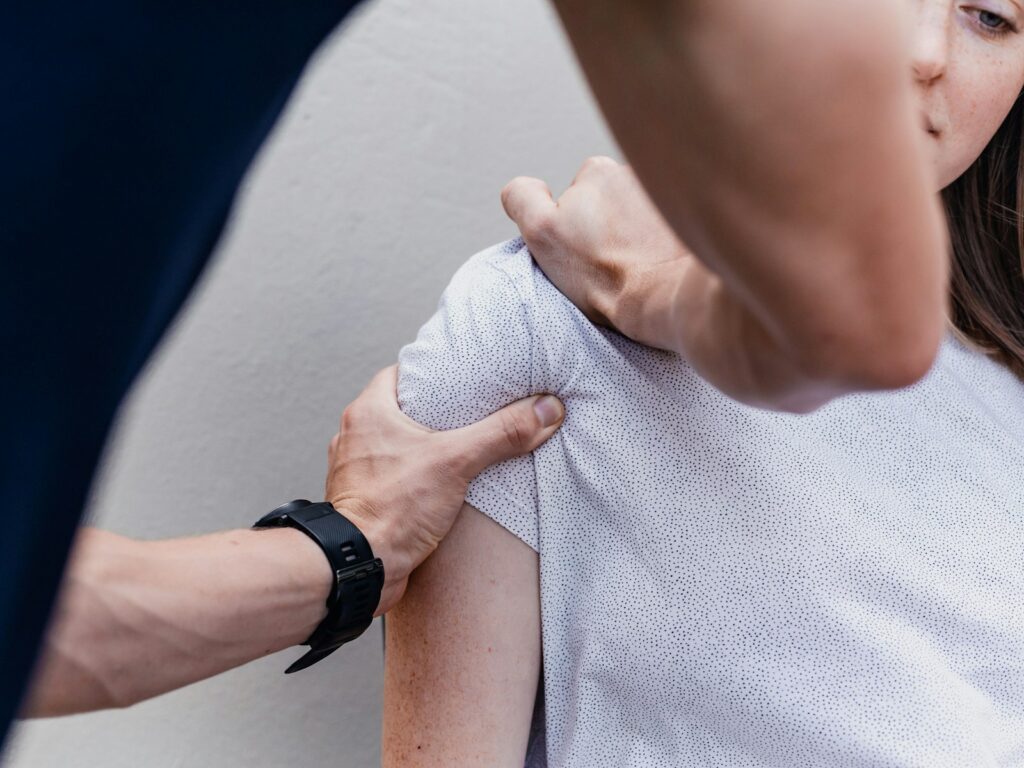
Rotator cuff surgery reattaches a torn tendon to the bone at the top of the arm. The operation is only half the job. The tendon then needs months to heal, and rotator cuff surgery recovery depends on rehabilitation that protects the repair early on while stopping the shoulder from getting stiff, then gradually rebuilds movement and strength.
This guide walks through the typical phases of rehab after a rotator cuff repair, what you can do at home in each one, and the warning signs to watch for. It is general information only, not medical advice. Every surgeon has their own protocol, and the timing for you depends on the size of the tear and the quality of the tissue. Always follow the instructions from your surgeon and physiotherapist.
The short answer
- Rehab after rotator cuff repair is staged: protect, then move gently, then use the muscles, then strengthen.
- A consensus statement from shoulder rehabilitation specialists describes about 2 weeks of strict immobilisation, protected passive movement from about weeks 2 to 6, active movement after that, and progressive strengthening from about week 12.
- Your own timeline may be faster or slower, depending on your tear, your tissue and your surgeon’s advice.
- Most of the work happens at home, through a daily exercise routine set by your physio.
- Recovery takes months, so steady progress matters more than speed.
Why rehab after rotator cuff repair is staged
A repaired tendon is at its weakest in the early weeks, while it is healing back onto the bone. Too much load too soon risks the repair. Too little movement for too long risks a stiff, painful shoulder. Good rehab steers between the two.
The American Society of Shoulder and Elbow Therapists’ consensus statement on rehabilitation after arthroscopic rotator cuff repair describes this as the gradual application of controlled stresses to the healing repair, taking into account the size of the tear, the quality of the tissue and individual factors. That is why two people who had the same operation on the same day can be on quite different programs.
The phases of recovery
Phase 1: Protection (roughly the first 2 weeks)
Your arm will usually be in a sling, and the priority is to protect the repair and settle pain. Your surgeon will tell you exactly what is allowed. Commonly, people are shown how to keep the elbow, wrist and hand moving while the shoulder stays protected. Use pain relief as prescribed, and ask your team whether ice is suitable for you.
Phase 2: Protected passive movement (roughly weeks 2 to 6)
“Passive” means the shoulder is moved without the shoulder muscles doing the work. Your physio may move the arm for you, or teach you to use your other arm, a table or a stick to guide it. The aim is to gently regain movement without asking the healing tendon to lift the arm. Lifting, pushing, pulling and reaching behind your back are usually still off limits.
Phase 3: Active movement (from about 6 weeks)
Once your surgeon is happy, you start using the shoulder muscles to move the arm yourself. Early active work often starts lying down or with the arm supported, then progresses to lifting the arm unaided. Light tasks at waist height, such as eating and brushing your hair, usually come back during this phase.
Phase 4: Strengthening and return to activity (from about 12 weeks)
Progressive strengthening usually starts around this point in the consensus framework, using bands, light weights and functional tasks. For people returning to demanding work, sport or activities such as gardening and golf, rehab continues with a gradual build-up of those specific tasks. Improvement often continues for many months.
Everyday life in a sling
The first weeks are often harder than people expect. A few practical tips:
- Dressing. Put the operated arm into sleeves first and take it out last. Loose, front-opening tops are easiest.
- Sleeping. Many people find it more comfortable to sleep propped up on pillows or in a recliner for the first few weeks. Ask your team about positioning.
- Showering. Ask your surgeon how to keep the wound dry and whether the sling can come off briefly. A shower chair can help.
- Help at home. Line up help with shopping, cooking and cleaning before surgery if you can. Our guide to post-surgical rehabilitation explains how home physio fits in after discharge.
- Driving. Do not drive until your surgeon says it is safe.
Getting the most from your home program
Your appointments guide the program, but most of your recovery happens in between. Short sessions, done regularly as prescribed, are generally better than an occasional long one. Keep a simple note of how the shoulder feels and any questions for your physio.
Mild aching during and after exercise is common, but sharp or lingering pain is a sign to ease back and check with your physio. Do not skip ahead to exercises that belong to a later phase, even if the shoulder feels good. How it feels is not a reliable guide to how well the tendon has healed.
Physio at home can be especially useful in the early weeks, when getting to a clinic with one arm in a sling is awkward. Your physio can also check how you are managing daily tasks in your own kitchen and bathroom. If you are still deciding on surgery, our article on rotator cuff injury physiotherapy covers non-surgical management.
When to contact your surgeon or doctor
Contact your surgeon or GP promptly if you notice:
- increasing redness, heat, swelling or discharge around the wound, or a fever
- pain that is getting worse rather than better, or is not controlled by your prescribed pain relief
- new numbness, tingling or colour change in the hand
- a sudden loss of movement or a new “pop” with pain, for example after a fall
- pain, swelling or warmth in the calf.
Call 000 if you have chest pain or sudden shortness of breath.
Frequently asked questions
How long will I be in a sling?
It varies with your surgeon and your repair. Many people wear a sling for several weeks. Your surgeon will tell you when it can come off and whether you should wean out of it gradually.
Why can’t I just lift my arm when it feels fine?
Lifting the arm makes the repaired tendon work before it has had time to heal to the bone. Feeling comfortable does not mean the tendon is ready for that load, so it is important to stick to the phase your surgeon and physio have set.
Will I get full movement back?
Many people regain good movement and strength, but results vary with the size of the tear, tissue quality and how closely rehab is followed. Your physio will measure your movement regularly so problems such as stiffness are picked up early.
Can I do my rehab at home?
Yes. Most rotator cuff rehab needs little equipment beyond a table, a stick and later some resistance bands. A home-visiting physio can supervise each phase and adjust the program as you progress. If you are also dealing with a stiff shoulder, our guide to frozen shoulder stages may be useful.
Shoulder rehab that comes to you
If you have had, or are about to have, a rotator cuff repair, our physiotherapists can guide each phase of your recovery at home across Melbourne and the Geelong region, working alongside your surgeon’s protocol. Make a referral or contact our team on 03 8824 0712 to book your first visit.
Written by
Calvin Yung, Mobile Physiotherapist
Calvin is a mobile physiotherapist at Khy Physio with a special interest in geriatric care, including mobility, balance, falls prevention and recovery after joint replacement. He speaks English, Cantonese and Mandarin. Meet Calvin