
Article & News
Broken shoulder recovery: healing a fractured upper arm at home
22/11/2026 · Khy Physio
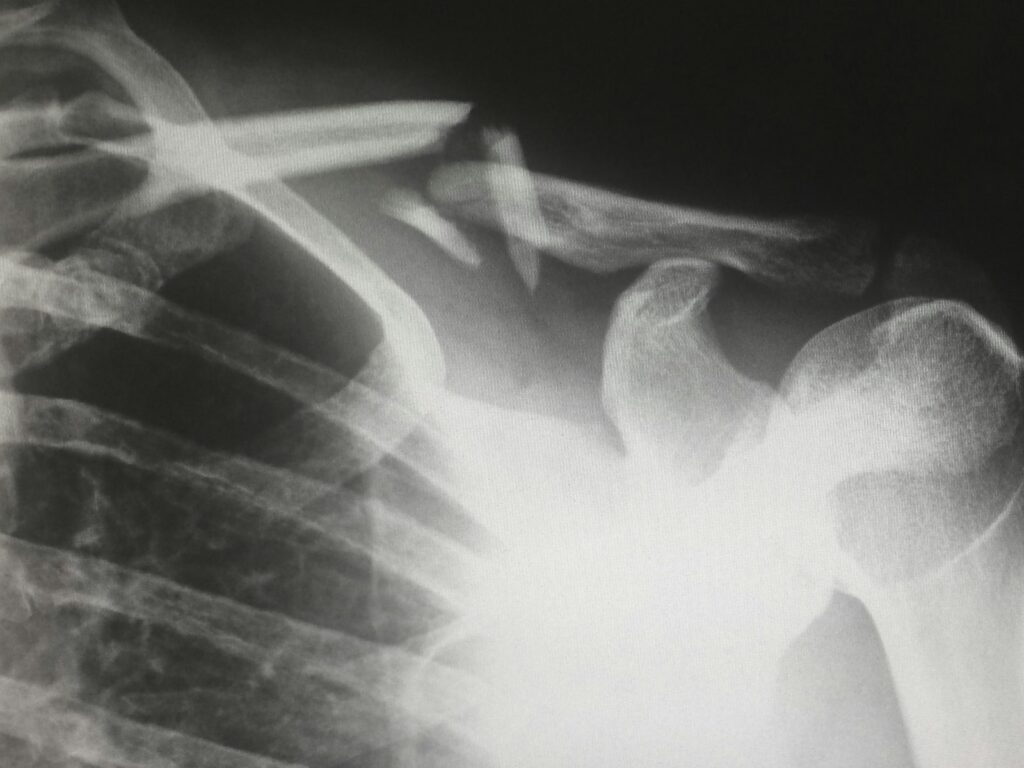
A “broken shoulder” in an older adult is usually a fracture at the top of the upper arm bone, called a proximal humerus fracture. It often happens after a fall onto an outstretched hand or straight onto the side of the shoulder. Many of these fractures heal well without surgery, using a sling for comfort followed by a gradual, well-timed return to movement guided by a physiotherapist. The pain, bruising and difficulty sleeping in the first weeks can be tough, but most people regain useful movement for everyday tasks.
This guide explains how broken shoulder recovery usually progresses, what the research says about surgery versus a sling, and practical tips for managing at home. It is general information only, not medical advice. Your fracture clinic or surgeon will decide what is right for your fracture, so always follow their instructions.
The short answer
- Many proximal humerus fractures in older adults are managed without surgery.
- For many displaced fractures, good-quality evidence shows surgery does not give a better result at one and two years than non-surgical treatment.
- Recovery usually moves through three stages: protection, assisted movement, then active movement and strengthening.
- Gentle movement is often started early, but only when your fracture team says it is safe.
- Because many of these fractures follow a fall, falls prevention is part of recovery.
Surgery or a sling?
Whether you need surgery depends on the type of fracture, how far the bone has moved, your age and your general health. For many people, the answer is a sling.
The PROFHER trial randomised 250 adults with displaced fractures of the upper humerus to surgery or a sling. Over two years, there was no significant difference in shoulder function between the groups. A later Cochrane review concluded, with high to moderate certainty, that for people with displaced proximal humeral fractures, surgery does not result in a better outcome at one and two years than non-surgical treatment, and may increase the need for further surgery. The review also noted there is not enough evidence to guide the choice between different rehabilitation approaches, so your program should be tailored to you.
The stages of recovery
Every fracture is different, and your fracture team will set the timing. As a general guide:
Stage 1: protection
In the early weeks, the arm is usually rested in a sling for comfort. Even while the shoulder is protected, you can usually keep the elbow, wrist and fingers moving to reduce stiffness and swelling. Your physio may also start gentle pendulum exercises if your team approves.
Stage 2: assisted movement
As the fracture starts to heal, you begin moving the shoulder with help, for example sliding your hand along a table or using your good arm to help lift the injured one. The aim is to regain range without straining the healing bone.
Stage 3: active movement and strength
Once the bone is strong enough, you start lifting the arm under its own power, then build strength so you can reach shelves, dress, wash your hair and carry light items.
Research suggests that for some fractures, starting movement early is helpful. In one randomised trial of impacted fractures treated without surgery, people who began moving the arm early had better shoulder function and less pain at three months than those who were kept immobilised for longer, with no increase in complications. This only applies when your team confirms your fracture is suitable.
Early exercises your physio may show you
Only start these once your fracture team has cleared you. Move gently, and stop if you feel sharp pain.
Hand, wrist and elbow movement
With the arm supported, make a fist and then spread your fingers wide. Bend and straighten your wrist. If allowed, take the arm out of the sling while seated with the forearm resting on a pillow, and gently bend and straighten the elbow.
Pendulum exercise
Stand beside a sturdy table and lean on it with your good hand. Bend forward slightly at the hips and let the injured arm hang down loosely. Gently sway your body so the arm swings in small circles or forwards and backwards. The movement should come from your body, not from the shoulder muscles. Keep the circles small.
Table slides
Later, sit at a table with the forearm of your injured arm resting on a towel. Slowly slide the towel forward along the table as far as is comfortable, then slide it back.
Managing daily life at home
- Sleeping. Many people find lying flat painful early on. Sleeping semi-upright in bed with pillows, or in a recliner, can be more comfortable.
- Dressing. Put the injured arm into sleeves first, and take it out last. Loose, front-opening tops are easiest.
- Showering. Ask your team whether you can remove the sling to shower. A shower chair and long-handled sponge can help, and let the arm hang gently while you wash under it.
- Posture. Try not to slump or hunch the shoulder up towards your ear. Sitting tall makes later movement easier.
- Falls. With one arm out of action, it is harder to save yourself if you trip. Clear walkways, use night lights, and take extra care on stairs. Our guide to falls prevention at home has practical steps.
When to see your doctor
Contact your GP or fracture clinic promptly if you notice:
- pain that is getting worse instead of gradually settling
- numbness, pins and needles or weakness in the arm or hand
- a hand that looks pale, blue or swollen, or feels cold
- redness, heat or discharge from a surgical wound, or a fever
- a new clunk, change in shape, or sudden loss of movement after a further fall
Call 000 if you have chest pain or sudden shortness of breath.
Frequently asked questions
How long does a broken shoulder take to heal?
Healing time depends on the fracture and your health. The bone often heals over a number of weeks, but getting movement and strength back usually takes longer. Your fracture clinic and physio will guide you through each stage.
Will I get full movement back?
Many people regain enough movement for most daily tasks, although some notice they cannot lift the arm quite as high as before. Keeping up your exercises gives you the best chance of a good result.
I also broke my wrist in the fall. Can I do both rehab programs?
Yes. Your physio will combine them into one practical program. Our guide to wrist fracture recovery at home covers the wrist side.
Can I have physio at home with a broken shoulder?
Yes. Home visits are especially useful when you cannot drive and one arm is in a sling. See our post-surgical rehabilitation page if you had surgery.
Get help with your shoulder recovery
If you or a family member has broken a shoulder, our physiotherapists can visit you at home across Melbourne and the Geelong region to guide each stage of recovery. Make a referral or contact our team on 03 8824 0712 to arrange a visit.

Written by
Calvin Yung, Mobile Physiotherapist
Calvin is a mobile physiotherapist at Khy Physio with a special interest in geriatric care, including mobility, balance, falls prevention and recovery after joint replacement. He speaks English, Cantonese and Mandarin. Meet Calvin