When to See a Physio for Shin Splints: Don’t Let Leg Pain Stop You
If you’ve recently increased your walking distance, started a new running program, or simply spent more time on your feet, you might be familiar with that nagging, throbbing ache down the front of your lower legs.

Table of Contents
Shin splints are one of the most common complaints we see, but they are also one of the most frequently ignored. Many people try to “push through” the pain, hoping it will disappear on its own. While rest often helps, knowing when to see a physio for shin splints is key to preventing a temporary annoyance from turning into a long-term injury like a stress fracture.
What Actually Are Shin Splints?
Medically known as Medial Tibial Stress Syndrome (MTSS), shin splints are essentially an overuse injury. They occur when the muscles, tendons, and bone tissue around your tibia (shin bone) become overworked and inflamed.
It’s often caused by the “Too Much” factor:
Too much too soon: Rapidly increasing exercise intensity or duration.
Too hard: Running or walking on concrete or hard surfaces.
Too worn: Wearing shoes that have lost their support.
When to See a Physio for Shin Splints
So, how do you know if you need professional help or just a few days on the couch? Here are the 5 clear signs it’s time to book an appointment with us.
1. The Pain Doesn’t Go Away With Rest
The hallmark of early-stage shin splints is pain that starts when you exercise but fades when you stop. However, if your shins continue to throb hours after you’ve taken your shoes off, or if you wake up with pain the next morning, the inflammation is not settling down.
2. The Pain is Sharp or Pinpoint
Generalised, dull soreness across the muscle is typical of standard shin splints. However, if you can point to one specific spot on the bone that is exquisitely tender or sharp when touched, this is a red flag. It could indicate a stress reaction or a stress fracture, which requires immediate professional management.
3. You’re Limping or Changing How You Walk
If the pain is severe enough that you have to adjust your stride, hobble, or shorten your walk, you are altering your biomechanics. This compensation can lead to secondary issues in your knees, hips, or lower back. A physio can assess your gait and correct these imbalances before they spread.
4. Home Remedies Aren’t Working
If you’ve tried icing, stretching, and new shoes, but the pain returns every time you try to get active again, there is likely an underlying biomechanical cause. We need to look at why the load is overloading your shins, is it weak glutes, tight calves, or flat feet?
5. You Are Worried About Falling or Balance
For our older clients, shin pain can sometimes be confused with other vascular or nerve conditions that affect balance. If your legs feel heavy, weak, or you feel unsteady, it is vital to get a thorough assessment to rule out other causes.
👇 Learn more about the benefits of mobile physiotherapy.

How Khy Physio Can Help
At Khy Physio, we take a comprehensive approach. We don’t just treat the pain; we look for the cause. Because we are a mobile physiotherapy service, we can come to you. This is especially helpful if your leg pain is making travel difficult or uncomfortable.
Our treatment often involves:
Gait Analysis: We watch how you walk or run to identify biomechanical faults.
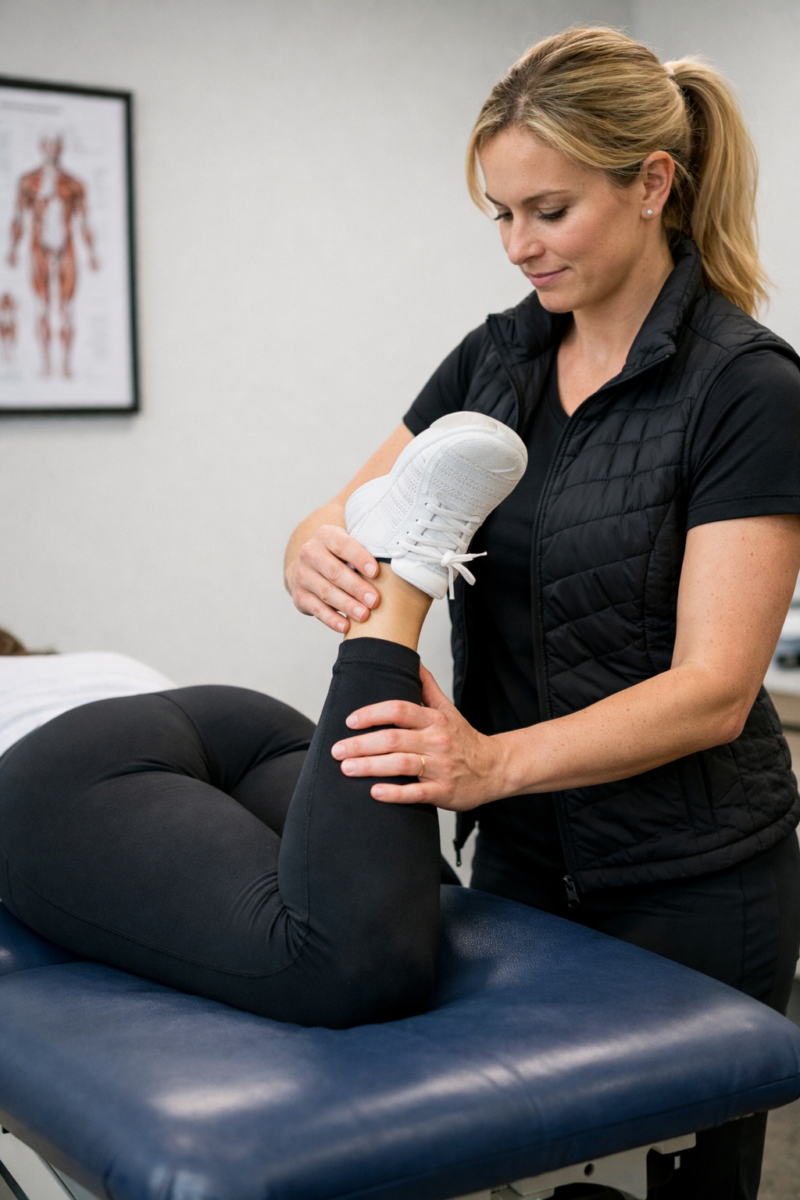
Hands-on Treatment: Soft tissue massage and mobilization to relieve tight calf muscles.
Load Management: Creating a tailored plan to keep you active without aggravating the injury.
Strengthening: Targeting the hips and calves to support the lower leg better.
The Bottom Line
Shin splints are stubborn, but they are treatable. You don’t have to sacrifice your daily walks or your fitness goals.
If you are unsure if your shin pain is serious, it’s always safer to get it checked. Contact Khy Physio today to book a mobile assessment in the comfort of your own home, and let’s get you back on your feet pain-free.