
Article & News
The 30 second sit to stand test: what your score means and how to improve it
29/10/2026 · Khy Physio
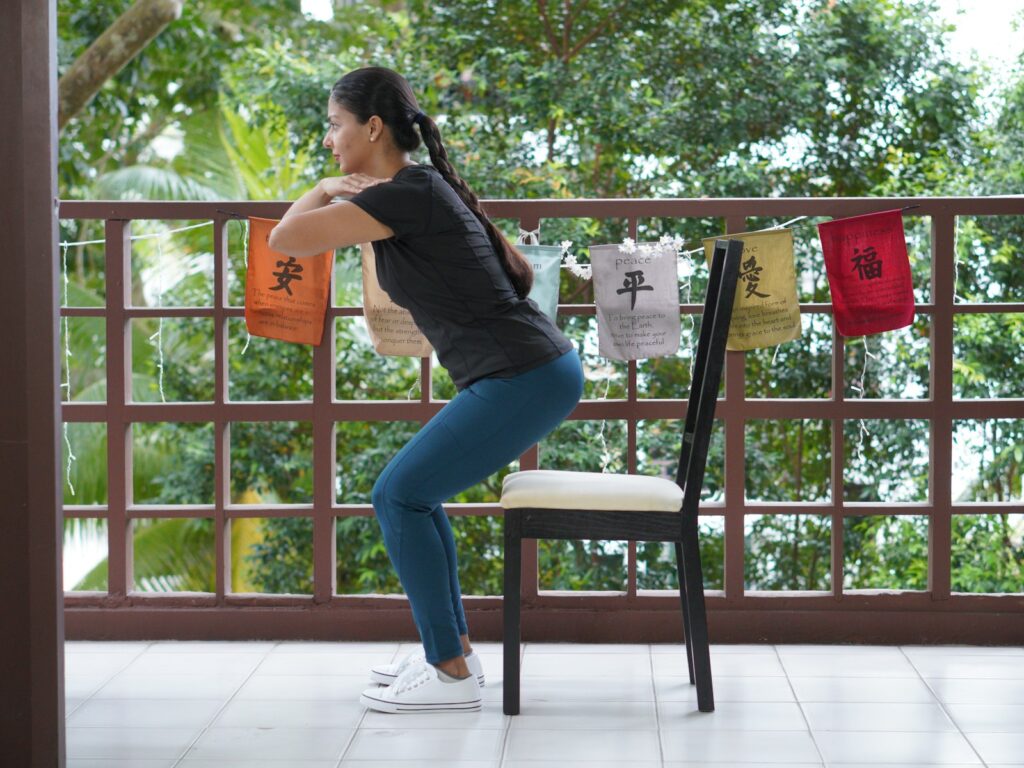
How many times can you stand up from a chair in 30 seconds, without using your arms? That simple question is the basis of the 30 second sit to stand test, also called the 30-second chair stand test. Physios use it to measure leg strength and endurance, track progress, and flag people who may be at higher risk of falls.
This guide explains what the test measures, how to try it safely at home, what your score means, and how to improve it. It is general information only, not medical advice. A single test does not diagnose anything. If you are worried about your strength or balance, please see your GP or physiotherapist.
The short answer
- The 30 second sit to stand test measures leg strength and endurance.
- You sit in a chair without armrests, cross your arms over your chest and count how many full stands you can do in 30 seconds.
- If you need to use your arms to stand, the test stops and the score is recorded as 0.
- The US Centers for Disease Control and Prevention (CDC) publishes below-average scores by age and sex. A below-average score indicates a risk for falls.
- Scores can improve with regular strength and balance exercise.
What the test measures and why it matters
Standing up from a chair uses the big muscles of your thighs and hips, along with balance and control. It is something you do many times a day: getting up from the couch, the toilet, the car or the dining chair. When leg strength drops, these everyday movements get harder, and the risk of falls rises.
The test is part of the CDC’s STEADI falls prevention toolkit because it is quick, needs no special equipment and gives a number you can track over time. Physios often repeat it every few weeks to see whether a program is working.
How to do the test safely at home
Only try this if you can usually stand up from a chair on your own. Have someone stand next to you for safety, as the CDC recommends. Do not try it if you feel unwell, dizzy, have had recent surgery, or have been told to avoid this kind of exercise.
You will need: a sturdy, straight-backed chair without armrests, with a seat about 43 cm (17 inches) high, placed against a wall so it cannot slide. You also need a stopwatch or phone timer.
The CDC test instructions are:
- Sit in the middle of the chair.
- Cross your hands over your chest, touching the opposite shoulders, crossed at the wrists.
- Keep your feet flat on the floor and your back straight, with your arms against your chest.
- On “Go”, rise to a full standing position, then sit back down again.
- Repeat for 30 seconds while your helper counts each time you reach full standing.
If you are more than halfway up when the 30 seconds finish, that stand counts. If you need to use your arms to stand, stop the test. The score is recorded as 0.
What your score means
The CDC lists these as below-average scores for the 30-second chair stand. A score below these numbers indicates a risk for falls.
- Age 60 to 64: men fewer than 14, women fewer than 12
- Age 65 to 69: men fewer than 12, women fewer than 11
- Age 70 to 74: men fewer than 12, women fewer than 10
- Age 75 to 79: men fewer than 11, women fewer than 10
- Age 80 to 84: men fewer than 10, women fewer than 9
- Age 85 to 89: men fewer than 8, women fewer than 8
- Age 90 to 94: men fewer than 7, women fewer than 4
These figures come from US data, and they are a guide, not a verdict. A below-average score is a good reason to talk to your GP or a physiotherapist about a strength and balance program. An average or better score is great news, but it does not rule out other falls risks, such as dizziness, poor eyesight, medications or hazards at home.
How to improve your score
The good news is that leg strength can still improve with training in later life. A Cochrane review of progressive resistance training found it is an effective way to improve physical functioning in older people, including strength and the performance of everyday activities. Examples a physio commonly uses are below. Hold a stable surface such as a kitchen bench for standing exercises, and stop if pain is sharp or you feel dizzy.
1. Sit to stand practice
- Sit near the front of a firm chair with your feet slightly behind your knees.
- Lean forward, “nose over toes”, and stand up. Use your hands on the armrests or your thighs at first if you need to.
- Sit down slowly, taking a few seconds to lower. As it gets easier, use your hands less, then not at all.
2. Bridges
- Lie on your back on the bed with your knees bent and feet flat.
- Squeeze your buttocks and lift your hips a little.
- Lower slowly.
3. Heel raises
- Stand holding the bench with both hands.
- Rise onto your toes, then lower slowly.
4. Mini squats
- Stand holding the bench, feet hip-width apart.
- Bend your knees a little, as if starting to sit, keeping your heels down.
- Straighten back up.
5. Marching
- Hold the bench and march slowly on the spot, lifting each knee.
Balance training matters too. A Cochrane review found programs of balance and functional exercises reduce the rate of falls in older people living in the community by 24%. Our articles on the best physiotherapy exercises for seniors and chair exercises for limited mobility have more ideas.
When to talk to your GP or physio
- Your score is below average for your age.
- You could not stand without using your arms.
- You have had a fall, or you feel unsteady.
- You feel dizzy or light-headed when you stand up.
Stop straight away if you get chest pain, severe breathlessness or feel faint. If chest pain does not settle quickly, call 000.
Frequently asked questions
Can I practise with my arms, even if the test does not allow it?
Yes. For training, using your hands is fine and can be a safe starting point. For the test itself, the arms stay crossed so your results are comparable over time.
How often should I retest?
Every few weeks is plenty. Use the same chair, the same position and the same time of day so you are comparing like with like.
My score was 0. What now?
That is useful information, not a failure. A physiotherapist can find a safe starting point, often using a higher chair or your hands, and build from there. See our guide to falls prevention at home in the meantime.
Want a proper strength and balance check?
Our physiotherapists visit homes across Melbourne and the Geelong region to test strength, balance and falls risk and build a program around your results. Make a referral or contact our team on 03 8824 0712.

Written by
Calvin Yung, Mobile Physiotherapist
Calvin is a mobile physiotherapist at Khy Physio with a special interest in geriatric care, including mobility, balance, falls prevention and recovery after joint replacement. He speaks English, Cantonese and Mandarin. Meet Calvin