
Article & News
How to help an elderly person out of bed, a chair or off the toilet safely
07/11/2026 · Khy Physio
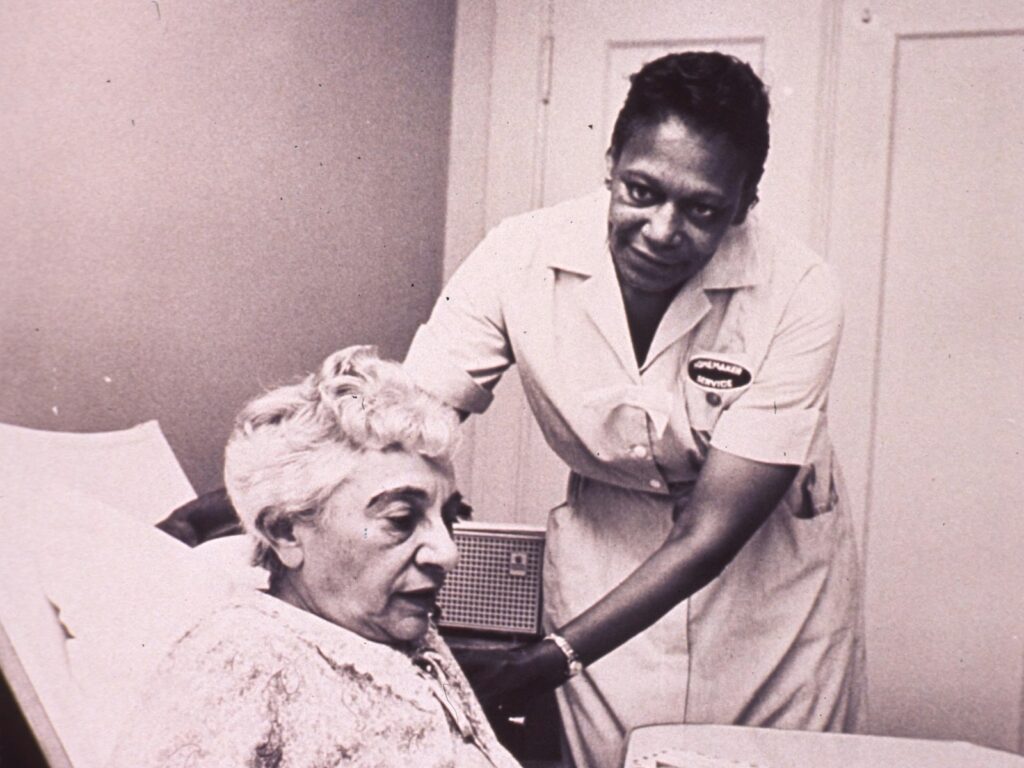
If you care for an older parent or partner, helping them out of bed, up from a chair or on and off the toilet may be something you do many times a day. Knowing how to help an elderly person out of bed safely protects both of you. The most important idea is simple: the person should do as much of the work as they can, and your job is to guide, steady and encourage, not to lift.
This guide sets out the principles and step-by-step methods for common transfers at home, based on WorkSafe Victoria and NHS guidance on moving people safely. It is general information only, not a substitute for hands-on training. Every person is different, so ask a physiotherapist or occupational therapist to show you the safest method for your situation.
The short answer
- Do not manually lift a person out of a chair or bed. If they cannot help with the move, use equipment such as a hoist.
- Lifting someone under the arms (the “hook arm lift”) is a high-risk method that WorkSafe Victoria says is not recommended.
- Encourage the person to push through their own legs and arms, and give clear, simple instructions.
- Set up first: brakes on, bed at a good height, walking aid within reach, path clear.
- Get training. A physio can teach you and the person you care for a method that suits you both.
Before any transfer: the ground rules
WorkSafe Victoria’s guidance on transferring people from beds and chairs is written for care workers, but the principles apply at home too:
- Ask first. Talk with the person about how much they can do, and encourage them to do as much as possible.
- Check the brakes. If a wheelchair is involved, make sure the brakes are on before you start.
- Adjust the height. If you have an adjustable bed, set it so neither of you is reaching or stooping.
- Prepare the space. Clear clutter, have the walking aid within reach, and make sure the person is wearing non-slip footwear.
- Explain each step. Tell the person what is about to happen and agree on a signal, such as “ready, steady, stand”.
- Never let them hold on to your neck, and do not pull on their arms. Guide them to push on the bed, the armrests or their walking frame instead.
Getting out of bed, step by step
For someone who can help with the move:
- Roll onto the side. Ask them to bend their knees, turn their head and roll towards the edge of the bed they will get out on.
- Sit up. As they let their legs drop over the edge, they push up with their arms into sitting. Guide at the shoulder and hip if needed, but let them do the work.
- Pause. Have them sit on the edge of the bed with feet flat on the floor for a moment. Some people feel dizzy after lying down, so wait until that settles.
- Get ready to stand. Ask them to shuffle forward so their feet are slightly back under their knees. If the bed height can be raised, raising it can make standing easier.
- Stand. On the agreed signal, they lean forward and push up into standing using their legs and arms, with their hands on the bed or the walking frame.
- Steady. Let them stand still for a few seconds and check they feel steady before walking.
Getting up from, and sitting down in, a chair
A firm chair with armrests and a seat that is not too low makes this far easier.
- Shuffle forward to the front of the seat.
- Feet back, slightly behind the knees and hip-width apart.
- Hands on the armrests.
- Lean forward so the nose moves over the toes.
- Push up through the legs and arms on the count.
Stand to the side rather than directly in front, so you are not in the way of their forward lean. To sit down, the person walks right up to the chair and turns until they feel the seat against the back of their legs. As WorkSafe describes, they then lean forward, reach back for the armrests one at a time and lower themselves slowly. Discourage “dropping” into the chair.
Toilet transfers
The toilet is often the hardest transfer because the space is tight and the seat is low. A few things help:
- Grab rails, a raised toilet seat or an over-toilet frame, recommended by a physio or occupational therapist.
- Walking in forwards, then turning with small steps until the back of the legs touches the toilet.
- Holding the rail or frame to lower down, not your arm.
- Planning clothing so it is easy to manage with one hand, such as elastic-waisted trousers.
When the person cannot help much
If the person cannot take much weight through their legs, manual lifting puts you both at risk. WorkSafe Victoria lists the hook arm lift, cradle lift and “top and tail” lift as high-risk methods that are not recommended practice. Safer options include:
- A slideboard for chair-to-chair or bed-to-chair moves, where the armrest can be removed and the person slides across in stages.
- A stand aid, for people who can bear some weight but need help to come up.
- A hoist, for people who cannot help with the move.
- Slide sheets, for repositioning in bed.
The NHS advises getting advice from an occupational therapist, physiotherapist or social worker before buying equipment, and trying it before you buy. Depending on eligibility, equipment may be funded through Support at Home, the NDIS or other programs. Our guide to physiotherapy funding options explains the main programs.
When to stop and get help
Stop the transfer and seek help if the person:
- suddenly cannot stand or take weight when they could before, which can be a sign of illness such as an infection
- becomes dizzy, pale, sweaty or confused
- has sudden weakness in the face or an arm, or slurred speech. Call 000 straight away, as these can be signs of a stroke.
If the person ends up on the floor, do not try to lift them. WorkSafe Victoria advises against manually lifting a person from the floor. If they are unhurt, they may be able to get up themselves with the help of a sturdy chair, as explained in our guide on how to get up after a fall. Call 000 if they are hurt or cannot get up.
Frequently asked questions
Is it OK to lift someone under the arms?
No. Lifting under the arms is the hook arm lift, which WorkSafe Victoria describes as a high-risk method that is not recommended. It can injure your back and the person’s shoulders and skin.
How can I stop them sliding down in the chair?
Sliding is often a sign that the chair is too deep, too soft or too reclined. An occupational therapist or physio can advise on seating and cushions, and on safe ways to reposition the person.
They could do this last month but not now. What should we do?
A change over days or weeks is worth checking with the GP, as illness, medication changes or pain may be involved. A physio can then work on leg strength and technique to regain what has been lost. Our falls prevention guide covers related risks.
Can a physio teach us at home?
Yes. Practising in your own bedroom, lounge and bathroom is the best way to learn. Your physio can also set exercises to make standing up easier over time.
Learn safe transfers at home
If transfers are becoming harder for you or the person you care for, our physiotherapists can visit you at home across Melbourne and the Geelong region to assess, teach safe techniques and build strength. Make a referral or contact our team on 03 8824 0712.

Written by
Calvin Yung, Mobile Physiotherapist
Calvin is a mobile physiotherapist at Khy Physio with a special interest in geriatric care, including mobility, balance, falls prevention and recovery after joint replacement. He speaks English, Cantonese and Mandarin. Meet Calvin