
Article & News
Frailty exercise: what frailty is and how exercise can turn it around
04/11/2026 · Khy Physio
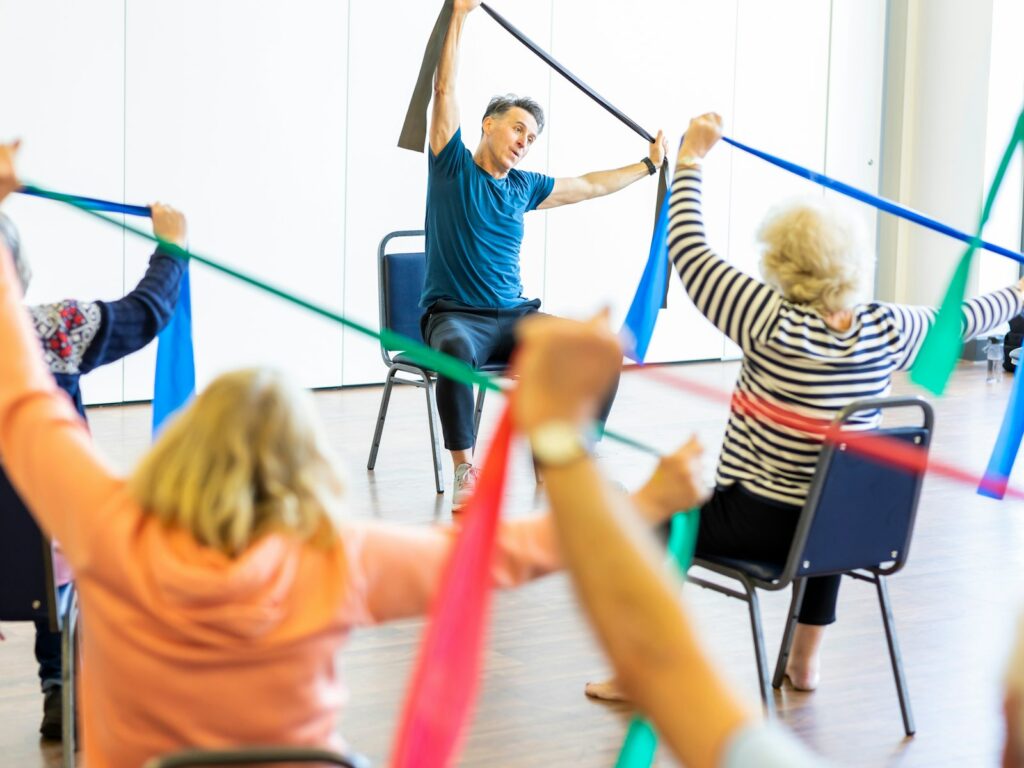
Frailty is not simply “getting old”. It is a recognisable condition in which the body’s reserves run low, so a minor illness, a fall or a hospital stay can knock a person much further back than it would otherwise. The encouraging part is that frailty can change, and frailty exercise, especially strength training, is one of the most effective tools for pushing it in the right direction.
This guide explains what frailty is, how it is identified, what international guidelines recommend, and how to start exercising safely. It is general information only, not medical advice. Please speak with your GP or physiotherapist before starting a new exercise program, particularly if you have heart, lung or other health conditions.
The short answer
- Frailty is a clinical syndrome linked to weight loss, exhaustion, weakness, slow walking and low activity.
- It raises the risk of falls, disability, hospital admission and death, but it is not the same as having a disability or many illnesses.
- Frailty is a changing state. People move between being frail, “pre-frail” and not frail, so acting early matters.
- Guidelines strongly recommend physical activity that includes resistance (strength) training as first-line management.
- A medication review, good nutrition and treating causes of fatigue are also part of the picture.
What is frailty?
One of the most widely used definitions comes from a large study of more than 5,000 people aged 65 and over (Fried et al, 2001). It describes frailty as three or more of these five features:
- Unintentional weight loss over the past year.
- Exhaustion, feeling that everything is an effort.
- Weakness, measured by grip strength.
- Slow walking speed.
- Low physical activity.
People with one or two of these features were described as being in an intermediate stage, often called pre-frail, with a higher chance of becoming frail. In that study, frailty predicted falls, worsening mobility, disability, hospital admission and death. Importantly, frailty overlapped with long-term illness and disability but was not the same thing. Someone can have several health conditions and not be frail, and vice versa.
Families often notice the signs before anyone names them: a parent who has stopped going out, takes longer to get up from a chair, has lost weight without trying, or seems to tire very quickly.
Can frailty be reversed?
Frailty is not a fixed label. A study that followed 754 older people over four and a half years found that more than half moved between frailty states at least once (Gill et al, 2006). The same study found that sliding towards more frailty was more common than improving, and that people who were already frail very rarely returned to being not frail on their own.
The message is to act early. Someone who is pre-frail, or frail but still living at home, has the most to gain from targeted exercise and support. The Asia-Pacific Clinical Practice Guidelines for the Management of Frailty make three strong recommendations:
- Use a validated tool to identify frailty.
- Prescribe physical activity with a resistance training component.
- Address polypharmacy by reducing or stopping medicines that are no longer needed or appropriate.
The same guidelines also suggest screening for treatable causes of fatigue, checking for reversible causes of weight loss and considering food fortification or protein and energy supplements, and prescribing vitamin D for people who are deficient.
What a frailty exercise program looks like
A good program is usually multi-component: strength training as the core, plus balance practice and walking or other activity to build stamina. For adults 65 and over, the Australian 24-hour movement guidelines recommend:
- moderate to vigorous activity for 30 minutes or more on most days
- muscle-strengthening activities on 2 or more days a week
- activities targeting mobility, balance and coordination on 3 or more days a week
- several hours of light activity each day, and breaking up long periods of sitting.
For someone who is frail, those targets are a destination, not a starting point. The guidelines for people with chronic conditions advise starting slowly and building up, and note that professional help may be needed. A physiotherapist can test strength, balance and walking speed, set a safe starting level and progress it as you improve.
Five exercises to start with
Do these only if your GP or physio agrees they suit you. Wear stable shoes, keep a sturdy bench or chair within reach, and stop if you feel chest pain, dizziness, unusual breathlessness or sharp pain.
- Sit to stand. Sit near the front of a firm chair with arms, feet hip-width apart. Lean forward, push through your legs and stand up, using your hands on the armrests if needed. Sit back down slowly. As you get stronger, try using less help from your hands.
- Heel raises. Stand facing a kitchen bench and hold on with both hands. Rise up onto your toes, then lower slowly.
- Wall push-ups. Stand an arm’s length from a wall with hands flat on it at shoulder height. Bend your elbows to bring your chest towards the wall, then push back.
- Supported marching. Hold the bench with both hands and march on the spot, lifting each knee a little higher as your balance allows.
- Seated knee straightening. Sit tall in a chair. Straighten one knee until the leg is level, hold for a moment, then lower slowly. Swap legs.
Strength training works best when it gets gradually harder over time, for example more repetitions, slower lowering, or light ankle weights once your physio is happy with your technique. More seated options are in our guide to chair exercises for limited mobility, and our falls prevention guide covers making the home safer while you build strength.
Beyond exercise
Exercise works best alongside a few other checks, usually led by your GP:
- A medication review. Ask your GP or pharmacist whether every medicine is still needed.
- Nutrition. Muscles need fuel to respond to training. If weight is dropping without trying, ask your GP about a referral to a dietitian.
- Fatigue. Tiredness can have treatable causes, so mention it rather than putting it down to age.
- Vitamin D. Your GP can check whether you are deficient.
When to see your doctor
See your GP if you or a family member notice unexplained weight loss, a noticeable decline in walking or getting up over weeks, repeated falls, or new confusion. Stop exercising and seek medical help if you get chest pain, pressure or tightness, severe breathlessness, or feel faint. Call 000 if chest pain is severe or getting worse, or has not eased after 10 minutes.
Frequently asked questions
Is someone ever too frail to exercise?
Very few people are too frail to do anything. The starting point may be a few sit-to-stands with support, or exercises in bed or a chair, but a physiotherapist can almost always find a safe place to begin.
Is walking enough?
Walking is valuable, but the guidelines specifically recommend resistance training for frailty. Walking alone does not usually build enough leg and arm strength, so it works best alongside strength and balance exercises.
How will we know if it is working?
Your physio can re-test simple measures, such as how long it takes to stand up from a chair several times, walking speed and balance, and compare them with your starting point. Day-to-day changes, like managing the shops again, matter just as much.
Can frailty exercise be done at home?
Yes. Many of the most useful exercises need only a chair and a bench. Our seniors physiotherapy service brings the physio to you, and home programs can be funded in several ways, including Support at Home, a Medicare GP care plan, DVA or private health insurance.
Start building strength at home
If you are worried that you or a parent are becoming frail, our physiotherapists can assess strength, balance and walking at home and set up a safe, progressive exercise program across Melbourne and the Geelong region. Make a referral or contact our team on 03 8824 0712 to arrange a visit.

Written by
Calvin Yung, Mobile Physiotherapist
Calvin is a mobile physiotherapist at Khy Physio with a special interest in geriatric care, including mobility, balance, falls prevention and recovery after joint replacement. He speaks English, Cantonese and Mandarin. Meet Calvin