
Article & News
Degenerative meniscus tear: why physiotherapy usually comes before surgery
08/11/2026 · Khy Physio
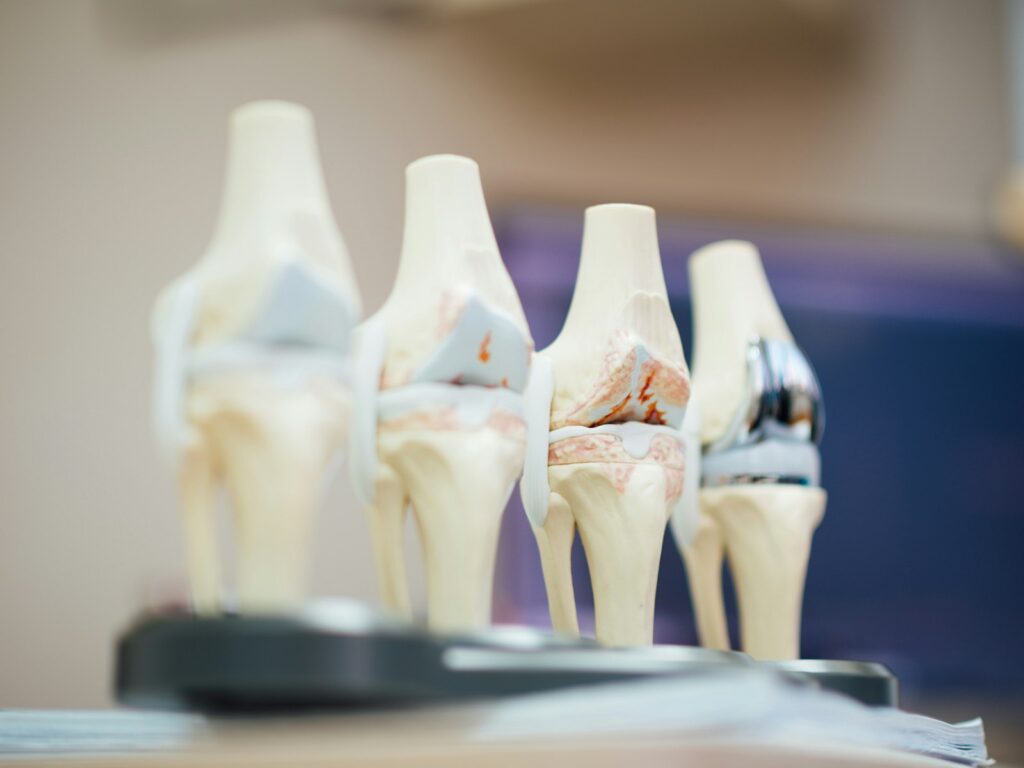
You have a sore knee, you have an MRI, and the report says “meniscus tear”. It is natural to assume the tear is the cause and needs to be fixed with surgery. For most people over middle age, that is not the case. A degenerative meniscus tear is very common in older knees, including knees that do not hurt at all, and the evidence strongly favours exercise-based physiotherapy over keyhole (arthroscopic) surgery as the first treatment.
This guide explains what a degenerative tear is, what Australian and international guidance says about arthroscopy, and what a physio-led program involves. It is general information only, not medical advice. Your GP, surgeon or physiotherapist can advise on your own knee.
The short answer
- Degenerative meniscus tears develop gradually and are common in knees with osteoarthritis, whether or not they cause symptoms.
- Australia’s Osteoarthritis of the Knee Clinical Care Standard says meniscal changes seen on imaging do not warrant arthroscopy.
- Arthroscopic procedures, including partial meniscectomy, provide little or no clinically significant benefit in pain or function for uncomplicated knee osteoarthritis.
- In a randomised trial, 12 weeks of supervised exercise gave similar results to arthroscopic partial meniscectomy at two years, with better thigh strength early on.
- A knee that is truly locked and cannot straighten is different, and needs prompt medical review.
What is a degenerative meniscus tear?
The menisci are two C-shaped pads of cartilage that sit between the thigh bone and shin bone, helping to spread load across the knee. In younger people, meniscus tears usually follow a twisting injury. In older adults, tears more often develop gradually as the tissue changes with age, frequently alongside knee osteoarthritis.
The Australian Commission on Safety and Quality in Health Care’s Osteoarthritis of the Knee Clinical Care Standard explains that degenerative meniscal tears are common in osteoarthritic knees whether people have symptoms or not. Finding a tear on a scan therefore does not add useful information, and may lead people towards treatment that will not help. The standard also notes that MRI is not recommended for the initial diagnosis of knee osteoarthritis.
What the evidence says about arthroscopy
Several strong sources point the same way:
- The Australian clinical care standard states that arthroscopic procedures, including debridement and partial meniscectomy, provide little or no clinically significant benefit in pain or function, and are not indicated as a primary treatment for uncomplicated knee osteoarthritis. “Uncomplicated” means there is no true mechanical locking, joint infection or inflammatory arthritis.
- An international guideline panel writing in the BMJ made a strong recommendation against arthroscopy in nearly all patients with degenerative knee disease, including those with meniscus tears, clicking or catching, and sudden onset of symptoms. The only possible exception it identified was a truly locked knee that cannot fully straighten (Siemieniuk et al, 2017).
- A randomised trial of 140 adults with a degenerative medial meniscus tear, average age about 50, compared 12 weeks of supervised exercise with arthroscopic partial meniscectomy. At two years there was no clinically relevant difference in knee outcomes, and thigh strength improved more in the exercise group at three months (Kise et al, 2016).
Surgery still has a place for some knee problems. For people with severe osteoarthritis whose function remains poor despite good non-surgical care, the care standard says joint replacement or joint-conserving surgery should be considered. Our guide to physiotherapy after knee replacement covers that path.
What physiotherapy involves
A physio program for a degenerative meniscus tear focuses on how the knee works rather than on the scan. It usually includes:
- Assessment of pain, swelling, movement, strength, balance and the activities you find hard.
- Progressive strengthening of the thigh, hip and calf muscles, which help control and support the knee.
- Balance and control exercises so the knee feels steadier on stairs, slopes and uneven ground.
- Load management, adjusting how much walking, kneeling or stair work you do while the knee settles, then building back up.
- Education about osteoarthritis, pain and what to expect.
The clinical care standard describes 12 weeks of optimal physical activity and exercise as part of the non-surgical care people should have before surgery is considered, which matches the length of the exercise program in the Kise trial.
Exercises to start with
Check with your physio that these suit your knee. Keep movements slow and controlled, hold a stable surface for balance, and stop if pain is sharp or the knee swells noticeably afterwards.
- Thigh tightening. Sit with your leg straight out on a bed. Press the back of your knee down into a rolled towel by tightening the front thigh muscle. Hold for a few seconds, then relax.
- Straight leg raise. Lie on your back with the other knee bent. Tighten the thigh of the straight leg and lift it to the height of the bent knee, then lower slowly.
- Sit to stand. From a firm chair, lean forward and stand up, then sit back down slowly. Use your hands if needed.
- Bridging. Lie on your back with knees bent and feet flat. Squeeze your buttocks and lift your hips, then lower slowly.
- Step-ups. Holding a rail, step up onto the bottom stair with the sore leg, then step down with the other leg first. Start with a low step.
More ideas are in our knee osteoarthritis home exercises guide. Mild discomfort during exercise is common and usually acceptable, but your physio can help you judge how much is too much.
When to see your doctor
See your GP promptly, or seek urgent care, if:
- your knee locks and you cannot fully straighten it
- the knee becomes hot, red and swollen, especially with fever or feeling unwell, as this can be a sign of infection
- you cannot put weight on the leg, particularly after a fall or twist
- the knee swells up quickly after an injury
- you have pain, swelling or warmth in the calf.
Frequently asked questions
Will the tear heal with physio?
The aim of physiotherapy is not to change the MRI but to reduce pain and improve how the knee works. Because tears are common in knees without any symptoms, a tear can remain on a scan while the knee feels and works much better.
My knee clicks and catches. Doesn’t that mean I need surgery?
Not usually. The BMJ guideline panel found the evidence against arthroscopy applies to people with clicking, catching and other mechanical symptoms. The possible exception is a knee that is truly locked and cannot straighten.
Do I need an MRI?
For most older adults with knee pain, a diagnosis can be made from your history and an examination. The Australian care standard says routine imaging is not needed to confirm knee osteoarthritis, and MRI is not recommended for initial diagnosis.
Can I have physio for my knee at home?
Yes. Our musculoskeletal physiotherapy service comes to you, which is helpful if the knee makes travel difficult, and lets us work on your own stairs and chairs.
Get your knee moving again
If you have been told you have a meniscus tear, our physiotherapists can assess your knee and set up a progressive exercise program at home across Melbourne and the Geelong region. Make a referral or contact our team on 03 8824 0712.

Written by
Calvin Yung, Mobile Physiotherapist
Calvin is a mobile physiotherapist at Khy Physio with a special interest in geriatric care, including mobility, balance, falls prevention and recovery after joint replacement. He speaks English, Cantonese and Mandarin. Meet Calvin