
Article & News
Tai chi for balance: what the evidence says and how to start
01/11/2026 · Khy Physio
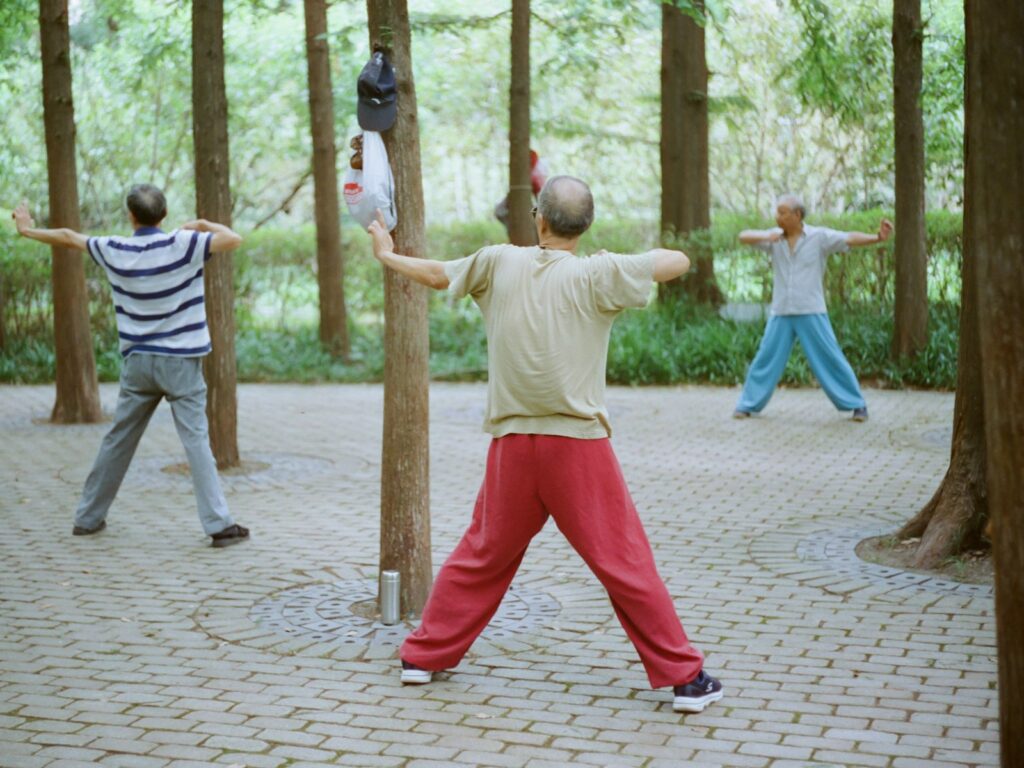
Tai chi is slow, calm and gentle, and it is also one of the better-studied forms of exercise for preventing falls in older people. If you have been wondering whether tai chi for balance is worth trying, the research is encouraging, and it is easy to start at almost any level of fitness.
This guide explains what the evidence says, how tai chi compares with other balance exercise, how to get started safely, and a few simple tai-chi-style movements to try at home. It is general information only, not medical advice. If you have had falls, get dizzy, or have a health condition that affects your movement, please check with your GP or physiotherapist first.
The short answer
- A 2019 Cochrane review found tai chi may reduce the rate of falls in older people living in the community by 19% (low-certainty evidence).
- The same review found tai chi reduces the number of people who have a fall by 20% (high-certainty evidence).
- Programs based on balance and functional exercises reduced the rate of falls by 24% (high-certainty evidence).
- Another review found bigger effects from exercise that challenges balance and adds up to more than 3 hours a week.
- Start with a beginner class suited to older adults, wear flat supportive shoes and build up gradually.
What is tai chi?
Tai chi is a Chinese martial art practised as a series of slow, flowing movements. There are several styles, but most involve:
- Shifting your weight smoothly from one leg to the other.
- Stepping forwards, backwards and sideways with control.
- Turning the body and changing direction.
- Coordinated arm movements, often with slightly bent knees.
- Calm, steady breathing and focused attention.
Many of these are exactly the skills balance depends on. Moving slowly means your muscles have to control your body through every part of each movement, and you spend brief moments with more weight on one leg than the other.
What the evidence says
The most thorough summary is a 2019 Cochrane review of exercise for preventing falls in older people living in the community. It found:
- Tai chi may reduce the rate of falls by 19% (low-certainty evidence) and reduces the number of people who experience a fall by 20% (high-certainty evidence).
- Balance and functional exercise programs reduce the rate of falls by 24% (high-certainty evidence).
- Programs combining several types of exercise, usually balance and functional exercises plus strength training, probably reduce falls too.
An earlier meta-analysis in the British Journal of Sports Medicine found greater effects from exercise programs that challenged balance and involved more than 3 hours of exercise a week.
In practical terms, tai chi is a good option for balance, particularly if you enjoy it and will keep doing it. It works well alongside strength exercises and other balance training, rather than as a replacement for them.
How to get started
- Check in first if you need to. If you have had falls, get dizzy, have severe arthritis, a recent joint replacement, or osteoporosis with a spinal fracture, ask your GP or physio which movements to modify.
- Find a beginner class for older adults. Community centres, local councils and seniors groups often run them. A good instructor will offer options for different abilities.
- Consider seated tai chi if standing for long periods is difficult. Many movements can be adapted in a chair.
- Wear flat, supportive shoes that fasten securely, and loose, comfortable clothes.
- Start small. Shorter sessions and shallower knee bends are fine at first. Build up over weeks.
- Practise between classes. Even a few minutes a day helps the movements become familiar.
Tai-chi-style movements to try at home
These simple movements borrow from tai chi. Do them at a kitchen bench with a sturdy chair nearby, and have someone with you the first few times. Move slowly, breathe steadily, and stop if you feel dizzy, unsteady or have sharp pain.
1. Side-to-side weight shift
- Stand at the bench with your feet a little wider than hip-width, knees soft, holding on lightly.
- Slowly shift your weight onto your right leg, then smoothly across to your left.
- Keep your body upright and your breathing slow.
2. Forward and back weight shift
- Stand side-on to the bench, holding it with one hand, with one foot a comfortable step in front of the other.
- Slowly shift your weight forward onto the front foot, then back onto the back foot.
- Swap feet and repeat.
3. Slow arm sweep with weight shift
- Hold the bench with one hand.
- As you shift your weight to one side, slowly sweep your free arm across in front of your body at chest height.
- Shift back and let the arm return. Swap hands and sides.
4. Slow step and touch
- Stand at the bench, holding on.
- Slowly step one foot forward and lightly touch the heel down, then bring it back.
- Repeat to the side, then behind. Swap legs.
How a physio can help
A physiotherapist can assess your balance, strength and falls risk, then help you decide whether tai chi, a home balance program or a mix of both suits you best. At a home visit, your physio can also check your home for hazards and practise movements in the space you will use. Our articles on balance exercises for older adults and falls prevention at home have more ideas.
When to see your doctor
- You have had a fall, or you feel your balance is getting worse.
- You feel dizzy or light-headed during or after exercise.
- You get chest pain, unusual breathlessness or palpitations. Stop exercising, and call 000 if chest pain does not settle quickly.
- You have new joint swelling or pain that lasts well after a session.
Frequently asked questions
How often should I do tai chi?
Aim for regular practice you can keep up. The research suggests balance-challenging exercise adding up to more than 3 hours a week has bigger effects, and that can be a mix of tai chi, a home balance program and strength exercises.
Is tai chi safe with knee or hip arthritis?
Usually, with sensible changes. Keep the knee bend shallow and the movements within comfort. Let your instructor know about your joints.
Is tai chi good for Parkinson’s?
Many people with Parkinson’s enjoy tai chi as part of their exercise. See our article on Parkinson’s exercises for balance for more on exercise and Parkinson’s.
Can I learn from online videos?
Videos can be a helpful extra, but a supervised class or a physio’s guidance is safer at the start, especially if your balance is uncertain.
Build your balance at home
Our physiotherapists visit homes across Melbourne and the Geelong region to assess balance and falls risk and build a program you will enjoy. Make a referral or contact our team on 03 8824 0712.

Written by
Calvin Yung, Mobile Physiotherapist
Calvin is a mobile physiotherapist at Khy Physio with a special interest in geriatric care, including mobility, balance, falls prevention and recovery after joint replacement. He speaks English, Cantonese and Mandarin. Meet Calvin