Article & News
Sarcopenia exercise: how to rebuild muscle as you age
15/10/2026 · Khy Physio
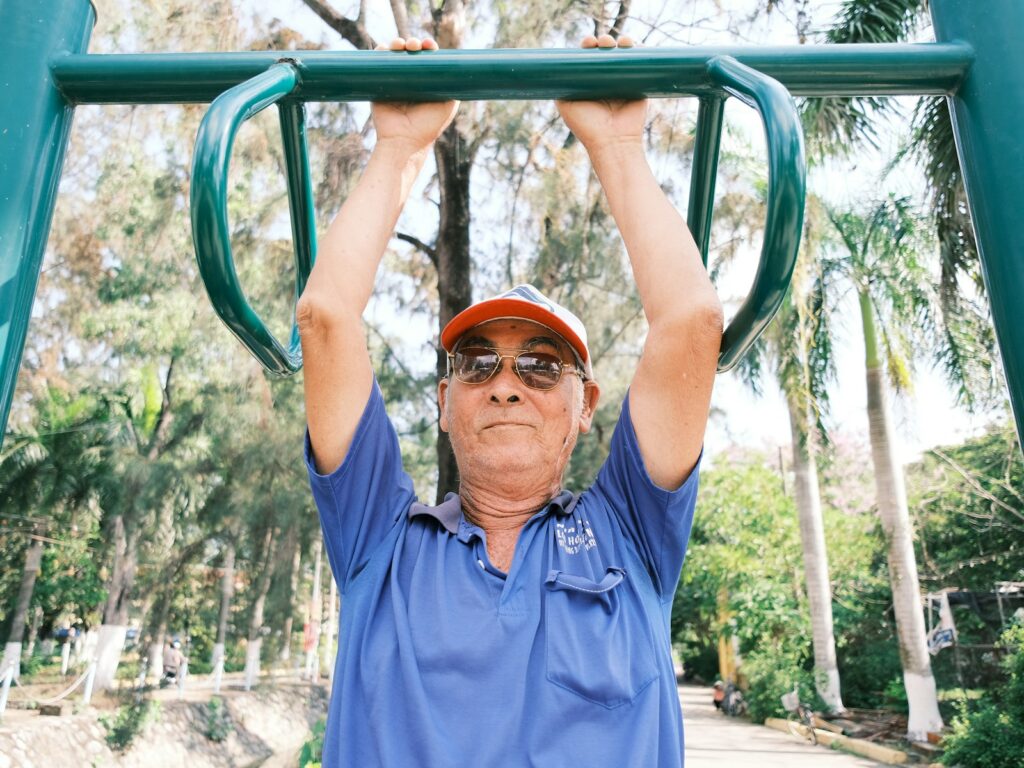
Finding it harder to get out of a low chair, carry the shopping or open jars? Losing muscle strength as we age is common, but it is not something you just have to accept. When muscle loss becomes significant, it is called sarcopenia, and the most effective response is sarcopenia exercise: strength training tailored to you, supported by enough protein in your diet.
This guide explains what sarcopenia is, the signs to look for, what Australian and New Zealand experts recommend, how much protein older adults need, and five safe exercises to start with. It is general information only, not medical or dietary advice. Talk to your GP, physiotherapist or dietitian before making changes, especially if you have heart, kidney or other health conditions.
The short answer
- Sarcopenia is an age-associated muscle condition involving low muscle mass, strength and physical performance.
- Australian and New Zealand consensus guidelines recommend offering tailored resistance (strength) training to people with sarcopenia, along with a healthy lifestyle.
- Australian recommended protein intakes rise after 70: 81 g a day for men and 57 g a day for women.
- For people 65 and over, Australia’s 24-hour movement guidelines (updated March 2026) recommend at least 30 minutes of moderate to vigorous activity on most days, plus muscle-strengthening activities on 2 or more days a week.
- Start low and progress gradually, ideally with a program set by a physiotherapist.
What is sarcopenia?
The Australian and New Zealand Society for Sarcopenia and Frailty Research describes sarcopenia as an age-associated skeletal muscle condition characterised by low muscle mass, strength and physical performance. Its consensus guidelines recommend using the revised European (EWGSOP2) definition in Australia and New Zealand (Zanker et al, 2022).
In everyday terms, sarcopenia is more than feeling a bit weaker. It is muscle loss that starts to affect how you move and what you can do.
Signs to look out for
- needing your arms to push up from a chair, or struggling with low seats
- walking more slowly, or tiring quickly on short walks
- a weaker grip, such as difficulty opening jars or carrying bags
- trouble with stairs or getting up from the floor
- clothes fitting more loosely around the arms and legs
- feeling less steady on your feet
If these sound familiar, talk to your GP or a physiotherapist. Simple tests of grip strength, walking speed and standing from a chair are commonly used to assess muscle strength and performance.
Why strength training matters most
Walking is excellent for your heart and general health. Strength (resistance) training is different: it works muscles against a load, such as your body weight, a resistance band or light weights. In the ANZ consensus, the statement with one of the strongest levels of agreement was to offer tailored resistance training to people with sarcopenia.
Australia’s 24-hour movement guidelines for older adults, updated in March 2026, recommend at least 30 minutes of moderate to vigorous activity on most days, muscle-strengthening activities that work all the major muscle groups on 2 or more days a week, and activities for mobility, balance and coordination on 3 or more days a week. If that is too much right now, start small and build up gradually, with help from a physio if you need it.
Protein: the other half of the picture
Muscle needs protein to rebuild. Australia’s Nutrient Reference Values set a higher recommended dietary intake for people over 70:
- Men over 70: 81 g of protein a day (about 1.07 g per kilogram of body weight).
- Women over 70: 57 g of protein a day (about 0.94 g per kilogram of body weight).
Good sources include eggs, dairy foods, fish, chicken, meat, legumes and tofu. Spreading protein across meals, rather than having most of it at dinner, can make the target easier to reach if your appetite is small. If you have kidney disease or a poor appetite, or are losing weight without trying, speak with your GP or a dietitian before changing your diet.
Five exercises to start with
Safety first: hold a stable surface such as a kitchen bench or the back of a sturdy chair for standing exercises. Move slowly and breathe normally rather than holding your breath. It is normal for muscles to feel worked, but stop if pain is sharp, or if you feel dizzy, short of breath or chest discomfort. Start with a few repetitions and add more gradually over the weeks. If you have a heart or lung condition, get your doctor’s advice first.
1. Sit to stand
- Sit near the front of a firm chair with your feet flat and hip-width apart.
- Lean forward and stand up, using your hands on your thighs or the armrests only if needed.
- Sit back down slowly and with control.
2. Wall push-ups
- Stand an arm’s length from a wall and place your hands on it at shoulder height.
- Bend your elbows to bring your chest towards the wall, keeping your body straight.
- Push back to the start.
3. Calf raises
- Stand holding the bench with both hands.
- Rise up onto your toes, then lower slowly.
4. Side leg raises
- Stand side-on to the bench, holding it with one hand.
- Keeping your body upright and toes facing forward, lift the outside leg a little way out to the side.
- Lower it slowly. Repeat, then swap sides.
5. Seated knee straightening
- Sit tall in a chair.
- Straighten one knee until the leg is out in front of you, and hold for a moment.
- Lower slowly and swap legs. Your physio may later add a light ankle weight.
As these get easier, your physio can progress you with resistance bands, light weights or step-ups. For more ideas, see our guides to physiotherapy exercises for seniors and chair exercises for limited mobility.
When to see your doctor
Gradual loss of strength is common with age, but some changes need a medical check. See your GP if you have:
- weight loss you cannot explain
- weakness that is getting worse over weeks rather than years
- muscle pain, cramps or weakness that started after a new medicine
- falls, near misses or feeling unsteady
Call triple zero (000) straight away for sudden weakness or numbness of the face, arm or leg, especially on one side, or sudden trouble speaking. These can be signs of a stroke.
Frequently asked questions
Is it too late to build muscle in my 80s?
It is rarely too late to start. The ANZ guidelines recommend tailored resistance training for people with sarcopenia, and tailored is the key word: the program is matched to what you can do now and built up from there.
Do I need a gym?
No. Many effective exercises use body weight, a chair and a kitchen bench. A physio can set up a program in your own home.
Should I take protein supplements?
Most people can meet their needs through food. If you are struggling to eat enough, ask your GP or a dietitian whether a supplement would help.
How is sarcopenia different from frailty?
They overlap. Sarcopenia is about muscle. Frailty is broader, covering reduced reserves across many body systems. Exercise is a key part of managing both.
Get stronger at home
Our physiotherapists visit older adults at home across Melbourne and the Geelong region and build strength programs around your goals and your space. Learn about our seniors physiotherapy, then make a referral or contact our team on 03 8824 0712.

Written by
Calvin Yung, Mobile Physiotherapist
Calvin is a mobile physiotherapist at Khy Physio with a special interest in geriatric care, including mobility, balance, falls prevention and recovery after joint replacement. He speaks English, Cantonese and Mandarin. Meet Calvin